


Blogs
Why Industrial PLCs are the Right Fit for Liquid Cooling Control Systems


As AI and high-performance computing push data centers to their thermal limits, liquid cooling and other cooling solutions are essential. Discover why industrial PLCs are the key to unlocking reliable, scalable, and future-ready cooling control in mission-critical environments.
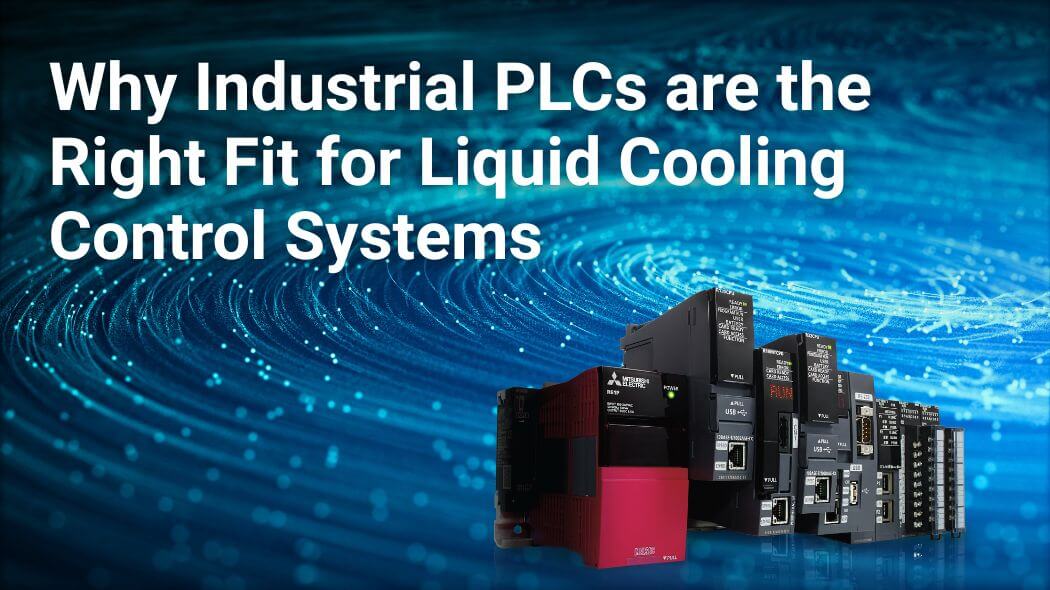
As data centers scale in size and performance, managing heat is becoming a critical challenge. A challenge that traditional air cooling methods often struggle to meet. This has led to the growing adoption of liquid cooling techniques, which offer superior thermal efficiency and enable higher computing densities. At the heart of these advanced cooling systems lies the need for precise, reliable, and scalable control. That's where industrial Programmable Logic Controllers (PLCs) come in. Designed for robust automation in demanding environments, PLCs provide the intelligence and flexibility required to monitor and regulate complex liquid cooling operations. They ensure optimal performance and uptime for mission-critical data center infrastructure.
Control systems deliver high-performance computing (HPC), AI workloads, and GPU-intensive environments. Performance, reliability, and long-term serviceability depend as much on the control architecture as the mechanical and thermal design, especially in liquid cooling applications.
Three primary approaches are commonly considered for liquid cooling control: open-source development platforms, custom-fabricated controllers, and industrial-grade PLCs. While each has its place in the development lifecycle, only one control solution is engineered for long-term, scalable deployment in mission-critical environments. Let's dive into these control options, describing the pros and cons of each.
- Open-Source Platforms: Prototyping Tools, Not Production Solutions
- Custom Controllers: High Flexibility, High Overhead
- Industrial PLCs: Engineered for Reliability, Scalability, and Future Growth
- Choosing the Right PLC for Liquid Cooling Control Systems
- Strategic Considerations for Deployment
- Looking Ahead: Future-Proofing Cooling Infrastructure
- Conclusion
- How Can We Help You?
Open-Source Platforms: Prototyping Tools, Not Production Solutions
Open-source control platforms are widely used in early-stage development due to their low cost, ease of programming, and broad community support. These platforms are suitable for proof-of-concept systems or educational applications.

However, they are not designed for continuous operation in industrial environments. They often lack native support for industrial protocols such as Modbus TCP/IP, BACnet/IP, and EtherNet/IP. Their reliance on general-purpose operating systems introduces latency and instability, particularly in real-time control scenarios. Power interruptions can result in system crashes, memory corruption, or unsafe states.
Furthermore, these platforms typically do not meet industrial standards for electromagnetic interference (EMI), safety, or environmental resilience. These limitations present unacceptable risks in applications supporting AI clusters, GPU racks, or other high-density compute environments. As liquid cooling becomes a foundational technology in these sectors, the need for robust, standards-compliant control systems becomes non-negotiable.
Custom Controllers: High Flexibility, High Overhead
As for custom control boards, these solutions offer high hardware flexibility. They can be tailored to specific I/O requirements, communication protocols, and physical constraints. This approach can reduce hardware costs and eliminate unnecessary features.
However, the burden of development and long-term support is significant. Firmware must be developed, tested, and maintained in-house. This includes implementing watchdog timers, fault handling, secure networking, and remote update capabilities. Integration with external systems or cloud platforms further increases complexity.
Custom solutions also introduce challenges in field serviceability. Most technicians are trained in standardized PLC programming languages such as ladder logic or structured text, not proprietary embedded firmware. Without a long-term engineering support plan, custom controllers can become a liability over time, especially in facilities where uptime and serviceability are paramount.
Industrial PLCs: Engineered for Reliability, Scalability, and Future Growth
Industrial PLCs are purpose-built to meet the demands of modern liquid cooling systems. These controllers are designed to operate reliably in harsh environments, with long product lifecycles and robust support infrastructure.
Choosing the Right PLC for Liquid Cooling Control Systems
Selecting the right PLC for a liquid cooling control system isn't just about hardware specs, it's about choosing a partner you can trust to support your data center's evolving needs. As liquid cooling becomes more prevalent in high-density computing environments, the demand for control systems that are both scalable and flexible has never been greater. A well-chosen PLC ensures seamless integration, precise thermal management, and future-ready adaptability, all while minimizing downtime and operational risk. Working with a trusted automation partner can make all the difference in achieving long-term reliability and performance.
Features to consider in a PLC provider include:
- Support for a wide range of industrial protocols, including Modbus, BACnet, and EtherNet/IP, enabling seamless integration with building management systems (BMS), data center infrastructure management (DCIM) platforms, and other operational technologies. They also should support secure networking, remote monitoring, and modular expansion.
- Integrated PID control, deterministic performance, and built-in redundancy features ensure stable operation even under fluctuating conditions. These systems are designed to recover to safe states after power loss and comply with industrial safety and EMI standards.
- The ability to expand I/O capacity as system requirements evolve is crucial for long-term planning. As cooling systems scale, whether by adding new racks, CDUs, or sensors, it's helpful when PLCs can be easily upgraded with additional I/O modules. This modularity allows operators to adapt to changing infrastructure without replacing the entire control system, reducing cost and complexity.
- Compatibility with emerging data center protocols and standards. This includes support for Redfish, a growing standard for out-of-band management and telemetry in data center environments. Integration with Redfish-compatible platforms enables centralized monitoring and control of cooling infrastructure alongside compute and storage assets. This is particularly valuable in AI and GPU-dense environments where thermal loads fluctuate rapidly and require real-time response.
- Standardized programming environments and tools to simplify development and maintenance. When paired with HMIs, VFDs, and remote I/O modules, these PLCs provide a scalable architecture that can evolve with the cooling system as demands increase.
To explore a PLC that meets all these demands and more, meet Mitsubishi Electric's iQ-R PLC.
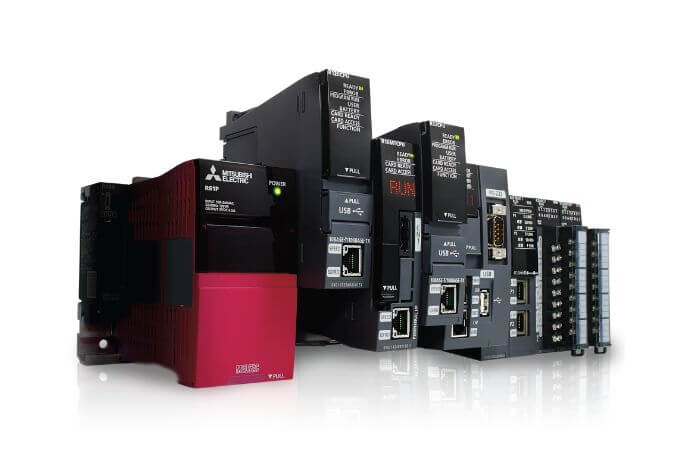
MELSEC iQ-R Series Programmable Controller
Strategic Considerations for Deployment
Liquid cooling is closer than ever to becoming a necessity in greenfield facilities. It is becoming a standard solution for managing thermal loads in AI, HPC, and GPU-dense environments. The control system must match the sophistication and reliability of the mechanical infrastructure it supports.
According to research conducted by Strategic Market Research, the global market for liquid cooling systems, including direct-to-chip, immersion, and hybrid solutions, was valued at USD 6.23 billion in 2023 and is projected to reach USD 24.88 billion by 2030, growing at a CAGR of 21.9%. This rapid growth reflects the increasing demand for energy-efficient thermal management in high-density compute environments.
At the same time, power densities in AI-focused data center racks commonly exceed 15 kW per rack, with some configurations pushing beyond 30 kW. These levels of heat output are challenging to manage with traditional air cooling, making liquid cooling viable and necessary.
Organizations evaluating control strategies should consider not only the system's technical capabilities but also its long-term maintainability, integration potential, and compliance with industry standards. Industrial PLCs offer a proven path to reliability, safety, and scalability.
For example, in a recent deployment of a modular Coolant Distribution Unit (CDU) supporting a GPU-based AI training cluster, the use of a PLC from Mitsubishi Electric enabled seamless integration with the facility's BMS and remote monitoring tools. The system was configured to respond dynamically to thermal load changes, with PID loops adjusting pump speeds and valve positions in real time. The inclusion of Redfish-compatible telemetry allowed the IT team to monitor cooling performance alongside server health metrics from a single dashboard.
This level of integration and responsiveness is difficult to achieve with open-source or custom-built controllers, which often lack the protocol support, redundancy, and serviceability required in production environments.
Looking Ahead: Future-Proofing Cooling Infrastructure
The demand for intelligent, connected infrastructure will only grow as data centers evolve. AI workloads are in greater demand and thermally intensive, and liquid cooling is emerging as the most efficient way to manage these challenges. At the same time, operators are under pressure to reduce energy consumption, improve uptime, and support remote operations.
Industrial PLCs are uniquely positioned to meet these demands. Their ability to integrate with cloud platforms, edge computing nodes, and modern telemetry protocols like Redfish makes them a future-ready choice. They also align with broader trends in smart manufacturing and Industry 4.0, where interoperability and data visibility are key.
Conclusion
Selecting the right control system for liquid cooling cannot be overstated. Industrial PLCs provide the performance, integration capabilities, and long-term support required for mission-critical deployments. Their compatibility with modern protocols, including Redfish, positions them as the most future-ready option for scalable cooling infrastructure.
Organizations investing in AI, HPC, and GPU-based systems should evaluate their control strategies with the same rigor applied to computing and networking infrastructure. Industrial PLCs are not just a technical upgrade; they are a strategic enabler for operational excellence.
Are you ready to revolutionize your data center cooling strategy? Download our eBook "Take Control of Liquid Cooling" to get started.

Want notifications for new Blogs, White Papers, Case Studies & Webinars?
Contributors

Pete Byrnes
Industry Marketing Manager (Data Center)
Mitsubishi Electric Automation, Inc.


-
Inquiries
-
Select
& Quote -
Share
-
Partners