


Blogs
Five Automation Technologies Improving Data Center Energy Efficiency


Summary: This blog outlines five automation technologies that improve data center energy efficiency by optimizing cooling, power distribution, and real-time data flow. It explains how DCIM platforms, fiber optics, hot-swapping PLC modules, properly sized VFDs, and Time-Sensitive Networking reduce waste and support more efficient operations.
Today’s infrastructure is being pulled in different directions. Consumers need electricity for everyday living. Businesses need it to get the job done.
Electricity consumption is typically measured in kilowatt-hours (kWh), which is the total amount of work or energy used, measured as 1 kilowatt of power expended for 1 hour.
According to the U.S. Energy Information Administration (EIA), an estimated 1.49 kWh was used for residential purposes in 2024. Another 1.43 trillion kWh was for commercial use, and 1.03 trillion kWh was for industrial use.
Manufacturing plants, wastewater treatment facilities, hydroelectric plants, and many other industrial organizations consume large amounts of energy, raising concerns about how well power grids can handle this excess. Data center energy efficiency is crucial to reducing strain on power grids nationwide.
An energy-efficient data center is a realistic goal, but it demands a thorough analysis of energy consumption and its optimal use. Here are just five automation technologies that assist with this.
1. Data Center Infrastructure Management (DCIM) Platforms
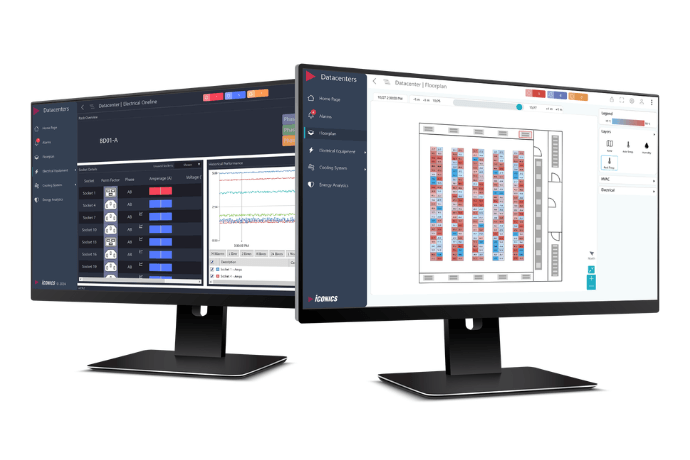
DCIM platforms are your data center’s brains. It continually monitors performance in real-time. It tracks the location of data center assets, captures data from various sensors, analyzes heat and floor maps, and delivers this information in clear visual reports or dashboards for you.
Precision Management
One of the biggest expenses in a data center is cooling. A proven DCIM platform can build 3D thermal maps to identify hotspots and monitor system performance. You can target cooling to a specific area instead of an entire room. It also allows you to avoid overcooling a room, which is wasteful.
DCIM also examines your data center’s layout and capacity. It can identify ghost servers and shut them down. It can also detect areas with high cooling demand that lack sufficient equipment, which helps plan the investment and placement of new components.
GENESIS simplifies management by monitoring your infrastructure’s health and making key changes only when and where it’s necessary. You have real-time information you can use to examine your carbon footprint and brainstorm ways to heighten data center energy efficiency.
Real-Time Energy Monitoring
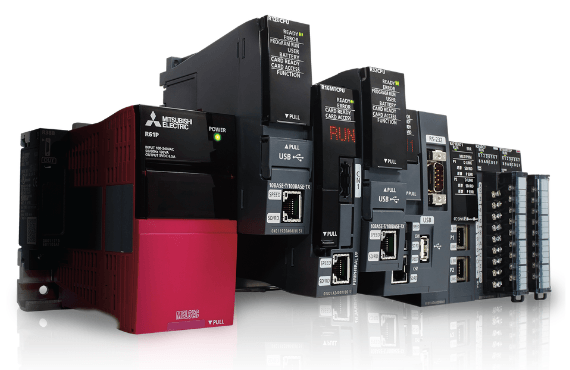
In the past, companies managed their energy usage by comparing monthly utility bills to previous months’ bills. From there, they figured out if usage was increasing or decreasing, when, and potentially why. GENESIS allows you to see real-time automation data when you pair it with Mitsubishi Electric's programmable logic controllers (PLCs) and other power monitoring devices.
GENESIS is a vendor-agnostic platform. It doesn’t matter what systems you currently use, or if there’s a mix of them. GENESIS works well with both Mitsubishi Electric components and third parties.
2. Fiber Optics
DCIM is the brain of automation, and fiber optics are the vessels that enable data to move around fluidly. Fiber optics provides these key benefits:
Improve Airflow
For every bundle of copper cabling, a single strand of fiber optic cabling performs the same function. Fiber optics is thinner and occupies less space. This creates space for improved airflow, ensuring your facility’s HVAC system cools servers effectively. You reduce the load on high-speed fans, helping to ensure air reaches the areas where it’s needed most.
Reduce Power Consumption
Copper wiring is obsolete in data centers because fiber-optic cables reduce your footprint, use less power, and dissipate heat more effectively. Instead of metal strands, fiber uses light instead of electricity. Light moves quickly and doesn’t require as much signal boosting as copper.
Fiber also generates no heat, reducing the demand on your data center’s cooling system. Cooling can be focused on servers rather than on cabling.
Enable High-Speed, Noise-Immune Data Transmission
Data flows quickly, typically without disturbances from heat, energy spikes, or signal interference that can lead to data packet loss, increased latency, or lag. Because there’s no lag or delay, energy optimization occurs quickly due to real-time information that’s constantly being analyzed as it travels from sensors to DCIMs.
Today’s fiber-optic networks can deliver the speeds data centers need. Communications from all over the facility get to your control room, without delay, up to 30 meters.
3. Hot Swapping PLC Modules
PLC modules control backup generators, cooling cycles, and power distribution. When a PLC fails, hot-swapping it with another prevents the need to shut down everything. Swapping out a PLC without powering down the controller avoids downtime, which benefits you by:
- Eliminating cold starts: Energy usage spikes when you start equipment from a complete shutdown. When you bring the system back online, it must run at maximum capacity to catch up, which consumes significant energy.
- End long service interruptions: Taking a system offline for major maintenance affects your business. If you can quickly swap one PLC for another, you usually won’t disrupt your routine for more than a few minutes.
- Maintaining steady state: "Steady State" is the point at which cooling and power systems reach an efficient operating level, with everything synchronized and operating at their optimal settings. If you can swap out PLCs without shutting down the system, you can keep that state and avoid starting from scratch.
- Preserving data integrity: Your DCIM depends on real-time data. If you take your system fully offline, a gap in real-time data occurs, making it more difficult for your DCIM to accurately identify corrections or improvements.
4. Properly-Sized VFDs
Think of variable frequency drives (VFDs) as dimmer switches that lower energy consumption in a data center's infrastructure. In a standard setup, fans, pumps, and motors run continuously at 100%. It is wasted energy, since you don’t always need things to run at max.
VFDs serve a data center's infrastructure by providing:
Lower Power Consumption
Properly-sized VFDs run on "affinity laws" where power consumption is based on the motor speed's cube. If you reduce a fan's speed by just 10%, your power consumption, on average, drops by more than double. They affect the rotational speed of three-phase induction motors, thereby optimizing performance. Mitsubishi Electric's VFD offering includes several units with built-in PLCs that can help you tune your drive to maximize efficiency via PID controls.
VFDs also enable soft starts, which gradually increase the voltage to the fans. When things increase slowly, you reduce wear on bearings, belts, and seals. It can also help you avoid peak demand rates from your energy company.
Matched Thermal Needs
VFDs also reduce unnecessary wear and tear. When cooling systems are matched to the exact thermal needs, it prevents waste from short cycling. Short cycling not only wastes energy but also accelerates equipment wear, increasing repair or replacement costs for cooling components.
Properly sized VFDs are excellent at providing DCIM platforms with real-time data regarding power drawing and RPMs on your data center's cooling system.
5. Time Sensitive Networking (TSN)
Communications are time sensitive. Time-Sensitive Networking is a set of Ethernet standards that maximizes efficiency and provides:
- Frame replication and elimination: Efficiency is increased by removing dropped data that must be retransmitted until it successfully arrives. Data always gets through on the first attempt.
- Network convergence: TCP/IP allows standard and time-sensitive data to run on the same equipment without interference. You don’t need as many cables, switches, or transceivers, which reduces the power consumption of the components. It also reduces cooling requirements by freeing up space in rack units.
- Synchronized timing: TSN uses a global clock to ensure that all devices on the network share the exact same time. This makes it easier for the system to be ready to receive the next transmission without repeatedly waking up from a sleep state.
- Time-Aware Shapers (TAS): Real-time data sent now is useless if it doesn’t reach DCIMs within 10 minutes.
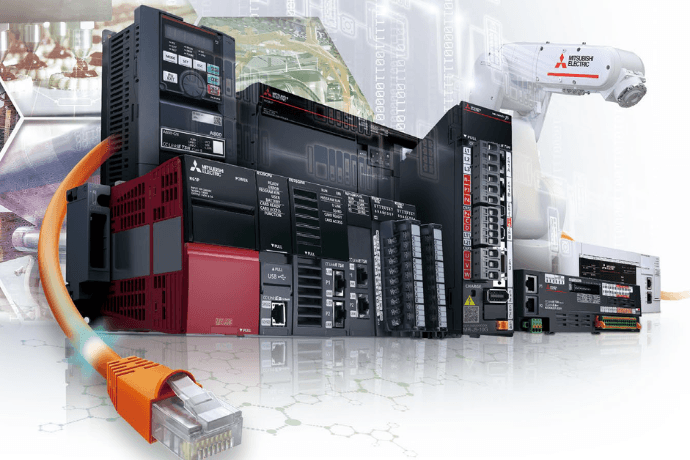
CC-Link IE TSN guarantees timely energy and control data that’s delivered when it’s needed and not minutes or hours too late. TAS schedules traffic to ensure critical data is always prioritized.
Our data center energy-efficiency experts are happy to discuss some or all of the automation technologies that improve your facility's efficiency and lower your carbon footprint, too.
Ready to Connect With Mitsubishi Electric US, Industrial Automation?
Want notifications for new Blogs, White Papers, Case Studies & Webinars?


-
Inquiries
-
Select
& Quote -
Share
-
Partners