


Blogs
Collaborative Robots vs. Traditional Robots in Packaging


Summary: This blog compares collaborative robots and traditional industrial robots in packaging, highlighting differences in speed, safety, cost, and performance. It explains why industrial robots dominate high-speed, high-throughput operations, while cobots are better suited for low-speed, human-assisted tasks. The article also outlines key factors, such as cycle time, environment, and integration, when selecting the right robotic solution.
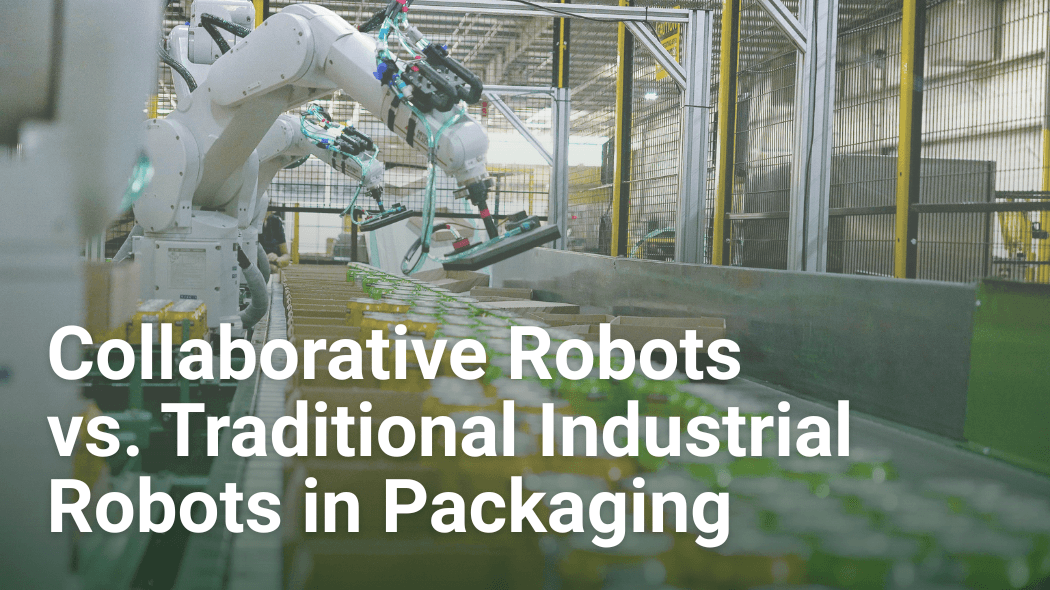
In 2025, the global packaging automation market was over $78 billion. It's expected to exceed $158 billion by 2034. Today's packaging automation division needs to be efficient and accurate. It's why packaging robots are dominating the industry. They're fast, repeatable, and handle complexity with ease.
Many industries rely on packaging automation, including the food and beverage industry. Not only must packaging be precise and quick, but food safety must also be considered. Life sciences are another sector that relies heavily on robots.
When you're tasked with choosing the right equipment for your plant's packaging needs, where do you start? One of the biggest debates is over traditional industrial robots versus collaborative robots, or cobots for short. Cobots in packaging certainly have their benefits, but they're not always cheaper, faster, or more efficient than traditional industrial robots.
The Realities of Humans and Cobots Working Together
The primary marketing point for cobots centers on their simplicity. They're supposed to work alongside human operators without requiring floor space or perimeter guarding. The reality is that this happens sometimes, but it’s not as useful in high-speed packaging operations.
Cobots aren't always cheaper, faster, or more efficient. How they operate depends on the underlying physics and the required regulatory safety frameworks. A cobot is supposed to limit kinetic energy or force in the event of an impact. That prevents serious injury, which is why cobots are helpful.
However, the packaging industry often comes down to parts per minute, cycle counts, or strict payloads. Consistent speed is everything. If cobots continuously adjust their kinetic energy to avoid a collision, your food item, medication, or other time- or temperature-sensitive material ends up sitting in a bottleneck for longer than you want, leading to wasted product.
Saving Money Ends Up Costing More
Another misconception is that cobots can do it all. There's no need for physical guarding. According to ISO 10218-2 and ISO/TS 15066 standards, safety risk assessments are mandatory for all robotic installations. The robot is part of a system, not the whole system. If your cobot handles heavy glass items and sharp objects, or operates at higher speeds than a human worker, it may no longer be a collaborative application.
Additions such as light curtains, physical barriers, and safety scanners are necessary to mitigate risk. These additions cost money, so the cobot that saved you money is no longer as affordable as you thought.
Cobots also often experience accelerated mechanical wear when operated at maximum speeds or repetitive heavy-duty cycles. This also impacts long-term maintenance and repair costs, lost revenue from equipment shutdowns, and workers being paid to sit and wait.
Packaging Tasks Determine the Best Choice in Robotic Technology
Before you choose between traditional packaging industrial robots and cobots, you need to consider the work you need completed. Instead of choosing the best technology based on industry trends, production engineers should consider the packaging line's operational parameters.
1. Cycle Time and Throughput Requirements
What are your cycle times? Processes like primary product picking, fast packaging, and high-speed multi-line case packing require extremely high acceleration and velocity. Cobots may not match the speeds you need. If speed, throughput, and sub-second cycle times are your priority, traditional packaging robots are best.
2. Environmental and Product Safety Considerations
When your packaging lines are in the food processing, pharmaceuticals, and dairy industries, speed is important, but you must also meet strict FDA requirements for food and drug safety. Sterile equipment is essential, and food-grade lubricants are required. Industrial packaging robots are built to meet those standards. Cobots may offer some protection options, but their controllers and sensors make them less suitable for sterile environments.
3. Footprint and Integration Limitations
Cobots typically have a small footprint because they don't need the same fencing and safety restrictions as traditional industrial robots. It doesn’t have to be the case, however. Mitsubishi Electric's MELFA SafePlus technology allows industrial robotic arms to operate without physical fencing. Instead, they have safety sensors that track the location of human workers.
If a worker enters the restricted zone, the industrial robot safely scales down its speed. Once it’s clear, the robot quickly returns to maximum speed. This approach balances the desire for a small footprint without forgoing high throughput.
4. Product Variability and Changeover Frequency
Your company's production requirements also influence your selection. If you're doing high-mix manufacturing, with dozens of SKUs and frequent changeovers, cobots are often appealing. But industrial robots excel in high-volume, low-mix manufacturing, where speed, consistency, and reliability are their specialties.
Why Industrial Robots Dominate the Packaging Industry
Traditional industrial robots remain the only choice if you need precision, high-speed packaging, and high-duty operations. In applications such as high-speed picking, product sorting, rigid case packing, and high-tier palletizing, traditional industrial arms continuously outperform cobots.
Industrial packaging platforms provide access to a broader, scalable line of hardware options.
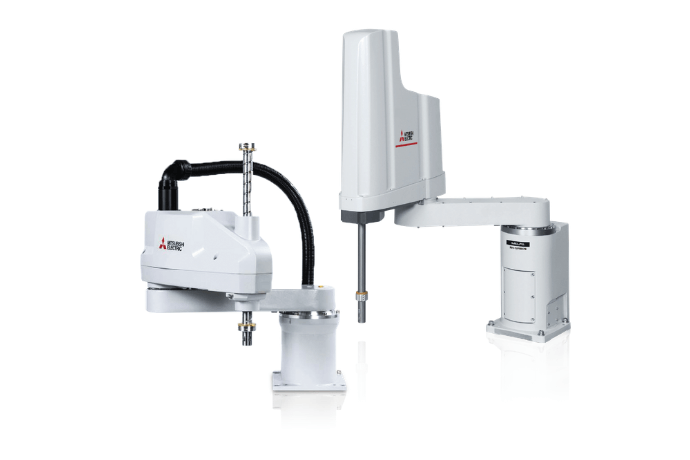
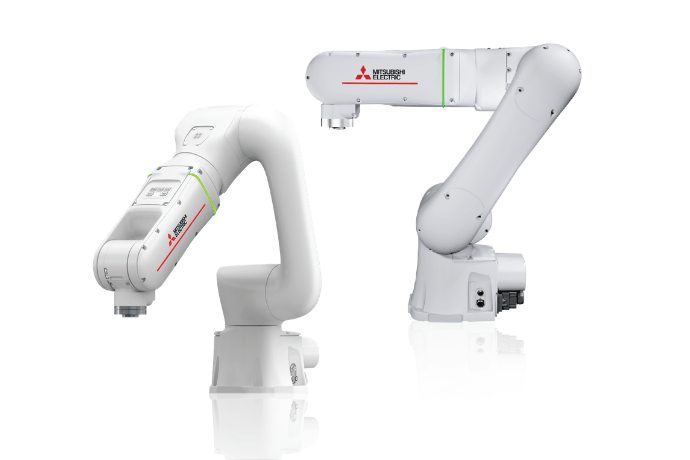
For instance, the Mitsubishi Electric MELFA FR Series offers a premium lineup of articulated arms and SCARA configurations engineered for complex, high-speed processes. For applications requiring a more cost-effective yet rigid solution, the MELFA CR Series is an alternative that maintains industrial-grade control, precision, and longevity while optimizing your expenses.
Choose Cobots for Low-Speed Workflows
While industrial robots are the primary choice for high-speed operations, cobots play an important role in specialized niche packaging environments. Consider cobots as purpose-built tools designed to work with humans in low-speed workflows. They may not be the most ideal solution in high-throughput industrial automation situations.
Ideal collaborative tasks include light pick-and-pack operations, inspection assistance, and some kitting operations. In these operations, a human worker handles more complex visual tasks, while the cobot handles repetitive material transport or lifting.
Mitsubishi Electric Offers a One-Vendor Engineering Advantage
Picking and choosing different components from multiple vendors may not be the best choice for your business. You've saved money, but the PLC from one vendor doesn't work with the VFD and interfaces from others. Your system is down while troubleshooting tries to pinpoint the issue.
Packaging automation thrives when a single, unified system includes components engineered to work together. Mitsubishi Electric provides a comprehensive one-vendor solution. Combine our PLCs and motion control systems with our VFDs, servo drives, HMIs, and robotics. You have a single ecosystem where components work seamlessly together, reducing integration and development time.
Networking and Synchronization
Our packaging automation requires strong networking and synchronization. These are important packaging enablers. Using CC-Link IE TSN (Time-Sensitive Networking), the first open industrial network combining TSN technology and gigabit Ethernet, means that your essential traffic, such as microsecond-fast responsive servo synchronization, can run on the same network cable as data-intensive vision inspection streams.
As a result, Mitsubishi Electric's industrial robots communicate with MELSERVO-J5 servos over a single network. If your packaging application requires that robots expertly track and pick products that aren't evenly spaced, this technology helps a lot. You no longer need to add expensive tracking modules to ensure precise synchronization.
From an operational standpoint, this single-platform approach delivers important benefits:
- Integrated Network Safety: The CC-Link IE TSN network fabric enables direct transmission of safety data. An entire line of industrial robots, servo systems, and VFDs is operated in sync with managed safety stops, with no need for hard-wired safety relays.
- Pre-Designed HMI Templates: Pre-designed HMI screens provide the operator with complete diagnostics for the industrial robot and peripheral motion axes.
- Unified Control Architecture: Programmers configure logic, motion parameters, and robotic paths using centralized software. There's no need for complex I/O tables or custom communication drivers.
Talk to Mitsubishi Electric About Your Packaging Automation Needs
While cobots in packaging offer some advantages for niche packaging tasks, don't consider them the default solution for your high-throughput production. Collaborative mechanisms are restricted by physics and regulatory safety requirements. They'll never match the speed, acceleration, and performance of a traditional industrial robot.
For packaging OEMs and manufacturing facilities that need to maximize yield, maintain tight cycle times, and ensure long-term mechanical reliability, traditional industrial robots such as the Mitsubishi Electric MELFA FR and CR Series deliver reliable performance. Call or email our packaging automation experts to learn more.
Ready to Connect With Mitsubishi Electric Automation?
Want notifications for new Blogs, White Papers, Case Studies & Webinars?


-
Inquiries
-
Select
& Quote -
Share
-
Partners