


Blogs
Key Considerations for Designing an Efficient Automated Conveyor System


Summary: This blog explains how to design an efficient automated conveyor system using digital prototyping, PLCs, VFDs, and industrial networks to improve efficiency, reduce downtime, and support scalable operations.
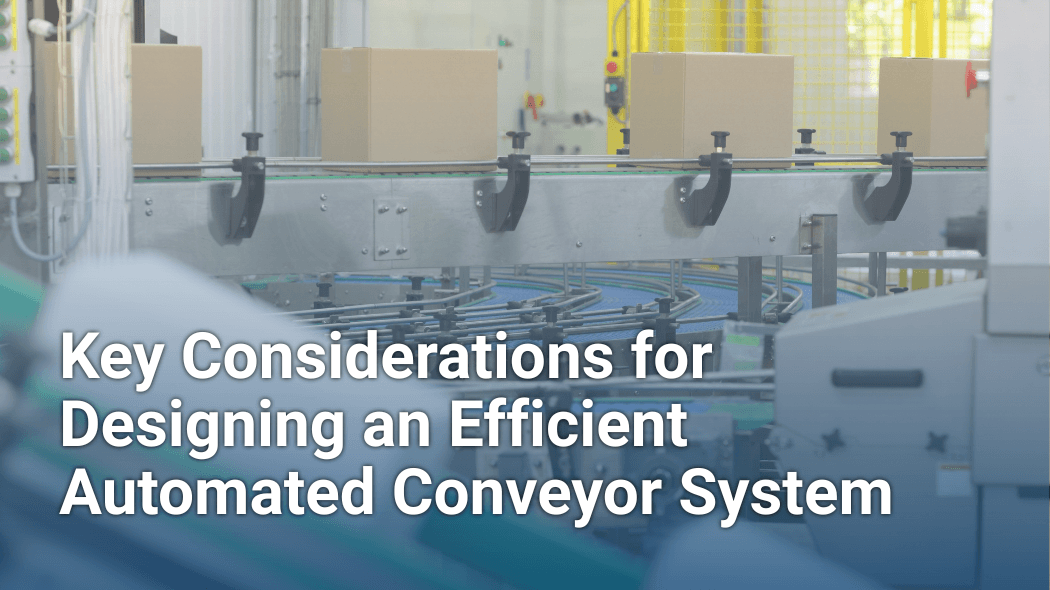
The purpose of a conveyor belt has always been to move items from Point A to Point B. Workers are accustomed to the constant motion and may not consider the capabilities of the conveyor system.
Times and technology are evolving, and today's automated conveyor systems provide more capabilities. Conveyor system automation delivers efficiency, data synchronization, and seamless integration, enhancing your bottom line.
Conveyor system automation refers to integrating conveyors with automated drives, controls, and industrial networks to efficiently and consistently transport materials across a facility. By automating movement, routing, and synchronization, these systems help reduce manual handling, minimize downtime, and support scalable operations.
Embrace Digital Prototyping & Layout Validation with MELSOFT Gemini
Your goal for your automated conveyor system is clear, but translating your vision into what’s installed on your factory floor isn’t always straightforward. You want efficient equipment that can adapt and grow with your company. You also prefer it to be sustainable, with minimal maintenance to minimize downtime.
Modeling and prototyping conveyor system automation is essential. When you create it in a 3D virtual environment, you collaborate with experts to design and build the perfect system for your needs. You can view and verify placement in a digital space, so you can see how it fits and functions within the area, all before it even arrives. 3D line simulation makes "results" visible before you launch, ensuring ROI.
MELSOFT Gemini is a 3D simulator that shows how equipment fits into your space and how conveyor components interact mechanically and logically within the system. It supports design validation and layout verification before equipment is installed.
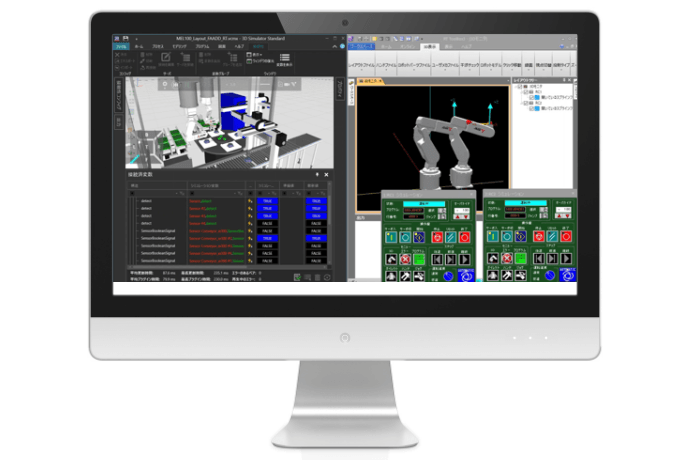
MELSOFT Gemini works like this:
- A 3D simulation machine design is completed
- The electrical and control designs are added
- Control programs are debugged virtually
- Physical assembly is completed
- Shorter operation checks take place both in the virtual workplace and on-site
- Final adjustments are made on-site
- The final run-off inspection is completed once the equipment is installed on-site
Before 3D simulation with Gemini, the process may have taken longer, and involved:
- Machine design
- Electrical design
- Control design
- Physical assembly
- Control programs debugged on physical assembly
- Lengthy operation checks on-site
- Adjustments and other debugging as needed.
- Run-off inspection
Gemini helps teams design, validate, and debug conveyor systems earlier in the project lifecycle. This allows mechanical layout, motion sequences, and control logic to be refined before installation, reducing commissioning time on the factory floor.
And, while 3D simulation supports mechanical and logical validation, real-world energy performance, load behavior, and maintenance strategies are evaluated using operational data from installed drives, motors, and control systems.
Get Precision Control and Energy Efficiency
Advanced programmable logic controllers (PLCs) continuously monitor system operation and collect diagnostic data. When this data is used by higher-level analytics, visualization, or maintenance systems, it can support predictive and preventive maintenance strategies.
Mitsubishi Electric PLCs and VFDs produce continuous, valuable operational data. When integrated with appropriate monitoring, analytics, or SCADA platforms, this data can be used to support predictive and preventive maintenance decisions. Why does this matter? If your conveyor belt unexpectedly breaks down, production comes to a screeching stop. You lose money every second it’s offline.
Predictive and preventive maintenance relies on visibility into equipment behavior over time. By monitoring trends such as vibration, temperature, and load conditions, potential issues can be identified earlier, allowing maintenance to be scheduled proactively rather than reacting to unexpected failures.
Integrated diagnostics make it possible to detect operating conditions that may indicate developing issues, such as:
- Excessive or insufficient motor loads
- Increased vibrations
- Sudden temperature changes
Integrating diagnostics with industrial automation networks, such as CC-Link IE TSN, ensures that all maintenance data is time-stamped and synchronized. With exact dates and times for changes or updates, root cause analysis (RCA) is easier to track and to determine why something went wrong. The faster problems are diagnosed, the faster repairs or corrections take place.
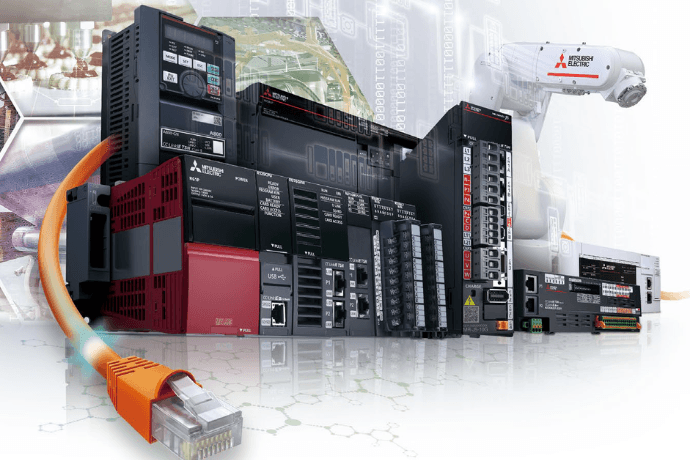
CC-Link IE TSN serves as a communicator between your drives, human-machine interfaces (HMIs), PLCs, and sensors. It’s capable of:
- Allowing non-essential and critical communications on one network
- Enabling high-speed control communications and IT traffic on one network without impacting performance
- Offering a user-friendly setup with automatic generation of network parameters and architecture
- Providing high-accuracy, high-speed, synchronized motor control applications
- Supporting flexible network topologies
Match Motor Speed to Conveyor Load
Matching a motor's speed to the conveyor load reduces energy consumption by a significant margin. Mitsubishi Electric's VFDs save money over fixed motors. It does this by adjusting voltage and current in real time, based on the actual load. Advanced excitation controls also:
- Eliminate extraneous stress during conveyor system start-up.
- Increase the reliability of your automated conveyor system.
- Reduce the cost of ownership.
- Support your company's sustainability goals.
When the motor speed matches the conveyor load, it also helps prevent problems that can cause product damage or worker injuries, further costing your business money.
Ensure Physical Deployment Goes Perfectly
Traditionally, you select equipment, have it installed in your plant, run it for the first time, and then determine what adjustments are needed. Sometimes the equipment falls short of your expectations, leaving you wishing you could have tested it before investing. 3D simulation makes that possible.
Mitsubishi Electric's engineers use Gemini to model your company's conveyor system in a 3D space. When everything is carefully planned, analyzed, and adjusted until it is perfect, the physical deployment goes smoothly.
These tests verify that conveyor layout, motion behavior, and control logic are aligned to the intended application requirements. This early validation helps reduce rework and design changes during physical commissioning.
Gemini helps ensure your system's placement and design are aligned with your operational goals for conveyor system automation. Hardware selection and energy optimization are addressed during system implementation through appropriate drives, motors, and control strategies that meet real operating requirements.
Make Sure Your Conveyor System Automation Is Ready for the Future
Future-proofing is more than having the latest technology. It is not about the latest machine or software upgrade. It is more about having equipment that evolves with market demands and avoids becoming obsolete.
When your conveyor system includes integrated automation intelligence, you have the perfect solution. Aim for these three goals:
1. Build Using 3D Technology
A digital-first automated conveyor system design is important. This digital design becomes a tool you can use repeatedly through the years. If you need a new configuration, you can rely on the 3D virtual prototype to plan, analyze, and implement the necessary changes.
2. Collect Data from Your Hardware and Software
Continually collect data on your conveyor system to ensure maintenance is handled before a catastrophe. Tracking vibrations, temperature shifts, stutters, and many other features alerts you to impending problems with conveyor belts, motors, and even the software itself.
3. Use an Expandable, Secure Network
Industrial IoT, specifically your company's network, needs to keep your plant running. This means having data when maintenance is completed, ensuring all messages, urgent or not, reach the correct target, and that your facility runs smoothly each day.
Mitsubishi Electric's engineers and sales team provide the best in conveyor systems automation. Schedule a consultation and take the first step towards energy-efficient, scalable conveyor automation.
Ready to Connect With Mitsubishi Electric Automation?
Want notifications for new Blogs, White Papers, Case Studies & Webinars?


-
Inquiries
-
Select
& Quote -
Share
-
Partners