


Blogs
The Evolution of Human-Machine Interfaces: From Basic Controls to Intuitive Experiences


Summary: Explore the evolution of Human-Machine Interfaces (HMIs) from basic controls to advanced, intuitive experiences. Learn how Mitsubishi Electric's GOT2000 series addresses modern industrial challenges with scalable, user-focused solutions and the latest trends in HMI technology.
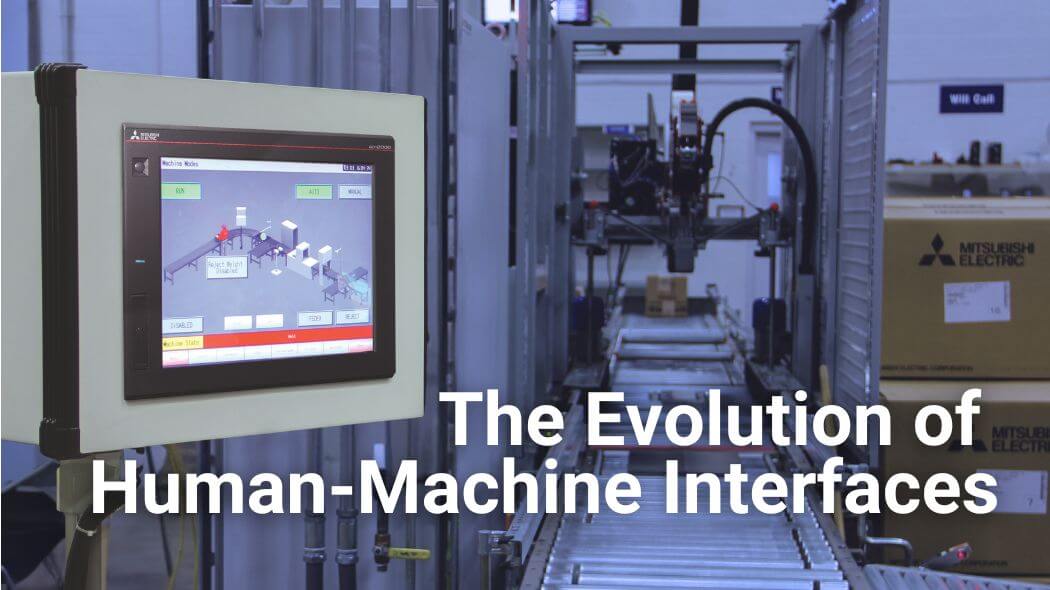
Human-Machine Interfaces (HMIs) have been an integral part of the industrial evolution, enabling seamless interactions between people and equipment. With technologies such as smartphones and tablets at the forefront of everything we do, operators have come to expect the same intuitive, interactive experiences from their HMIs.
As a leader in industrial automation solutions, Mitsubishi Electric has been a key innovator in developing customer-focused HMI solutions. In this article, we'll explore how Mitsubishi Electric HMIs continue to evolve to meet the challenges of modern industry.
What is a Human-Machine Interface?
An HMI is a device or software that enables interaction between humans and machines. Modern HMIs integrate visualization, control, and connectivity features, making them essential in smart manufacturing.
Common Challenges and Solutions with HMIs
While the evolution of HMIs has brought significant improvements, many organizations still face challenges when transitioning from legacy systems to modern interfaces.
- Integration with Legacy Systems: Modern HMIs like Mitsubishi Electric's GOT2000 series offer backward compatibility.
- Operator Resistance: Intuitive designs reduce training time and improve adoption.
- Scalability: Advanced HMIs support modular expansion and remote access.
- Data Security: Built-in authentication and encryption protect sensitive data.
Stand-Alone HMIs and Basic Controls
Early HMIs featured pushbuttons, panels, indicator lights, and fixed control systems. These initial designs were limited by a lack of intuitiveness, inflexible layouts, minimal scalability, and few integration options. As the complexity of machines increased, the need for more advanced, integrated, and user-friendly HMIs became clear, prompting the transition to today's more advanced designs.
Modern Touch and Visual Interfaces
Modern smartphones and tablets have influenced HMI design, while also raising the bar for how customers expect their HMI to operate. Intuitive menus, touch, zoom, swipe, and scroll features have become a standard part of our daily lives. So, these capabilities have been gradually integrated into HMIs to provide operators with the familiarity they desire. Current HMIs now feature touchscreens, gesture-capable panels, enhanced graphics, and configurable menus.
At Mitsubishi Electric, we recognize the importance of intuitive user interfaces (UIs) in the workplace. Our HMIs are designed to be more flexible, scalable, and easy to navigate. Our GOT2000 (Graphical Operator Terminal) series of HMIs features a user-friendly interface, complete with a touchscreen that supports zoom and scroll functions.
Scalability and Integration of HMIs
Today's complex industrial environments require flexible, multi-tasking interfaces. The Mitsubishi Electric GOT2000 series is a top-tier solution.
Here are some of the reasons why GOT2000 stands out as a scalable HMI solution:
- Can be used on several machines at the same time, thanks to its flexible and scalable design.
- Allows easy importing and exporting of HMI screens to the GENESIS version 11 SCADA Suite, so user interfaces are accessible from machine-level to enterprise-level systems.
- With the GT SoftGOT2000 HMI software, you can run the HMI on a Windows PC.
- Provides reliable connections and communication with hundreds of PLCs.
HMIs Focused on User Experience
User experience is central to the design of HMI systems. From integration to operation, our HMI solutions consider usability at every stage and skill level. Rather than forcing operators to adapt to the HMI, our HMIs adapt to them. Intuitive menus and consistent interface visuals throughout the entire GOT2000 series help simplify training, reduce errors, and ensure smooth implementation in your plant.
What Makes an HMI an Intuitive Experience?
When considering implementing an HMI, it is essential to recognize the features that will promote flexibility, scalability, and ease of operation.
Mitsubishi Electric's GOT2000 series delivers an intuitive experience with features including:
- Touch panels with zoom, scroll, and menus that are easy to navigate
- Communication drivers that support connectivity to a range of industrial devices across lines and plants
- Windows PC integration via GT SoftGOT, reducing the need to switch between platforms when multitasking
- SCADA integration using GENESIS version 11, which includes unlimited licensing, advanced visualization, and connectivity to other Mitsubishi Electric devices
- Remote monitoring and mobile access for centralized operation
Choose from a wide range of GOT Series options from Mitsubishi Electric, each tailored to meet your industry's unique challenges and enhanced with features to streamline your operations.
Industry Trends and Future Direction of HMIs
HMIs continue to evolve rapidly, driven by technological advancements and changing user expectations.
Key trends shaping the future of HMIs include:
- Artificial Intelligence and Predictive Analytics: Next-generation HMIs are beginning to incorporate AI to provide predictive maintenance alerts, adaptive interfaces, and data-driven insights for operators.
- Voice and Gesture Control: As voice recognition and gesture technologies mature, future HMIs may allow operators to interact hands-free.
- Augmented and Virtual Reality (AR/VR): AR overlays and VR training modules are emerging as tools to visualize complex processes, guide maintenance, and accelerate onboarding for new operators.
- Cloud Connectivity and IIoT Integration: The Industrial Internet of Things (IIoT) is making it possible for HMIs to connect seamlessly with cloud platforms, enabling centralized monitoring, remote diagnostics, and real-time data sharing across multiple sites.
- Personalization and Adaptive Interfaces: Future HMIs may offer customizable dashboards and adaptive layouts that adjust to individual user preferences and roles, further streamlining workflows.
Why Choose Mitsubishi Electric for HMIs
Mitsubishi Electric's GOT2000 series offers:
- Flexible design
- Advanced visualization
- Remote monitoring
- Integration with industrial networks
If you are interested in HMI solutions to modernize your operations, improve operator efficiency, and enhance plant performance, contact us to learn more.
Frequently Asked Questions
- What is a Human-Machine Interface (HMI)? An HMI is a system that allows operators to interact with machines, often through graphical displays and input controls.
- What are the benefits of modern HMIs? Improved usability, scalability, remote access, and integration with advanced automation systems.
- How does Mitsubishi Electric's GOT2000 series stand out? It offers intuitive design, flexible integration, and advanced visualization features.
Want notifications for new Blogs, White Papers, Case Studies & Webinars?


-
Inquiries
-
Select
& Quote -
Share
-
Partners