


Blogs
Lights-Out Manufacturing Starts with Robotic Machine Tending: A Practical Blueprint


Summary: This blog explains how manufacturers can begin lights out manufacturing by starting with robotic machine tending. It outlines a practical, step by step blueprint focused on unattended CNC machining, pallet systems, monitoring, and recovery routines that shops can realistically implement.
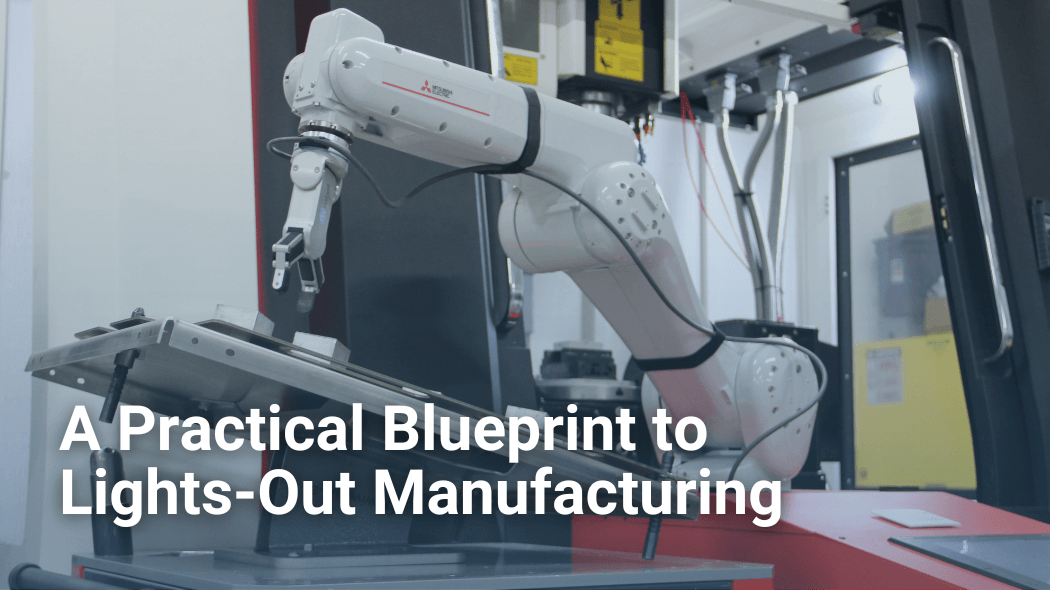
If "lights-out manufacturing" feels like something only mega-factories can pull off, you are not alone. Many machine shops picture complex flexible manufacturing systems, big facility changes, and a long, risky ramp-up.
The reality is simpler. For many CNC environments, the most practical first step toward unattended machining is robotic machine tending, because it attacks the most common bottleneck: consistent loading, unloading, and repeatable handling.
This article lays out a practical blueprint you can actually use, with a clear focus on how tending robots enable 24/7 machining, multi-pallet systems, and automated recovery routines.
What is robotic machine tending?
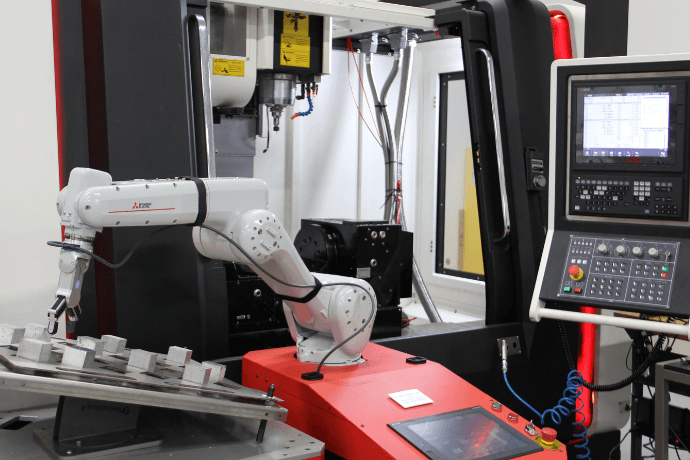
Robotic machine tending is the automated operation of industrial machine tools, most often CNC mills and CNC lathes, using a robot to handle parts and keep the machine running.
At its core, a CNC machine tending robot performs:
- Loading raw material or blanks
- Unloading finished parts
- Restarting the cycle consistently
Machine tending often extends beyond basic loading and unloading. It frequently leads to additional value-added tasks such as part inspection, blow-off, wash, deburring, sorting, packaging, and gauging.
That matters for lights-out manufacturing, because unattended machining is rarely just “hit cycle start and hope.” It is about designing a cell that can keep producing quality parts, even when conditions vary.
Why lights-out manufacturing starts with machine tending
Shops typically do not fail at lights-out because they lack ambition. They fail because they try to jump to a full end-to-end system before the basics are stable.
Robotic machine tending is a strong starting point because it directly improves productivity, part quality, machine utilization, operator safety, operational flexibility, and visibility into performance through analytics.
Those benefits show up quickly when idle time is eliminated due to predictable reasons such as breaks, shift changes, and inconsistent staffing.
Top-performing shops lean into utilization and unattended time
Gardner Business Media's "Top Shops Benchmarking" survey notes that "top shops" (profitable shops) differ from others in capacity utilization, robot usage, lights-out capability, and, of course, profit margin.
A similar note from the Association for Manufacturing Technology (AMT) shows the same directional story. Consistently profitable shops run equipment for more hours per day and frequently report lights-out or unattended machining.
That being said, you do not need perfection across your shop. Learning from the success of profitable shops, you need a reliable cell that runs longer hours with fewer interruptions. And machine tending is a direct path to that.
A practical blueprint: build a tending cell that can run unattended
This is the "doable" version of lights-out manufacturing, built around CNC machine tending robots, pallet pools, and recovery routines.
Step 1: Pick the right first machine and part family
A practical rule many shops use is to start with the job where labor constraints are already impacting shipment or limiting output. In many cases, shops pick their mills and lathes because the workflows are well-understood.
Pick a first target where:
- The part presentation is predictable (tray, nest, or pallets)
- The cycle time is stable enough to schedule around
- The work holding approach is repeatable
- The quality checks are known and not overly manual
Step 2: Design for steady flow
A robot tending cell is not "robot plus machine." It is a small system. At minimum, design these interfaces:
- Part staging in (raw stock, blanks, or pre-fixtured parts)
- Part staging out (finished part location that is easy to verify)
- Safe and consistent door or access management (manual or automated)
- Cycle start and status signals between CNC and robot
In many cases, when processing time is long enough, a shop will use a single robot to tend 2 CNC machines. These instances require an efficient layout that utilizes minimal floor space.
Step 3: Add multi-pallet systems and staged part presentation (for impactful unattended time)
If you want true unattended machining, you need time capacity, meaning enough staged work to keep the spindle busy beyond a short window.
This is where multi-pallet systems, or pallet pools, become a practical enabler. A pallet pool increases “walk-away time” by letting the machine run through multiple queued setups.
According to an article from American Machinist, pallet pools are a core building block for unattended machining because they expand the number of workpieces available without constant operator intervention.
Practical guidance for impactful unattended time:
- If your parts can be pre-fixtured, pallet pools are a natural fit.
- If your parts are raw blanks, use structured trays or drawers that the robot can reliably access.
- Safe and consistent door or access management (manual or automated)
- Cycle start and status signals between CNC and robot
Step 4: Add monitoring and data (so you know what happened at 2:00 a.m.)
Lights-out machining is not just about running. It is about detecting issues early enough to recover or at least notifying the right person with clear context.
MTConnect is a manufacturing data standard that uses a normalized vocabulary and information model, with adapters translating machine data and an agent serving it for monitoring and analysis.
For lights-out manufacturing, the value is straightforward:
- You can track machine state and events consistently
- You can trigger alerts from alarms or downtime conditions
- You can build a factual picture of utilization trends over time
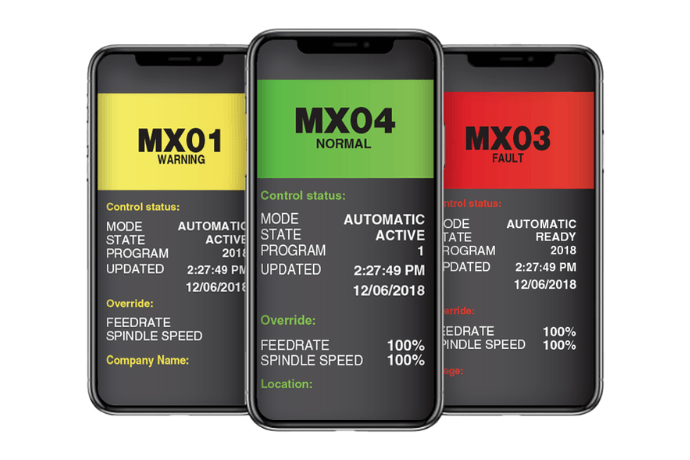
Mitsubishi Electric's IMA Adapter (Integrated Machine Analytical Adapter) software allows you to obtain raw data from compatible Mitsubishi Electric CNC controls. A mobile app version allows you to take this data with you, in the palm of your hand.
Step 5: Implement automated recovery routines
If you want unattended machining, you must plan for what happens when reality intrudes. This may include a part that is slightly out of position, a pickup failure, a machine alarm trigger, or a bin fill.
Industrial robots can “react” to changing conditions through integrated safety-rated logic processing. Many support health monitoring and predictive-maintenance-style calculations at the robot level.
Automated recovery routines typically include:
1) Pick and place verification
- Confirm part presence before pick up
- Confirm part is secure after pick up
- Confirm part seated before release
2) Retry logic
- If the grip fails, retry pickup a limited number of times
- If placement fails, retract, re-approach, and retry
- If still failing, place the part in a defined "reject" location and continue if safe
3) Safe stop behavior
- If the CNC alarms, the robot moves to a safe position
- If the guarding or safety zone is triggered, the robot stops and then resumes cleanly when cleared
4) Downstream capacity checks
- If the finished bin is full, divert to a secondary bin or pause safely
- If the raw tray position is empty, switch to the next tray or pallet
5) Escalation rules
- For "recoverable" errors, retry and continue
- For "non-recoverable" errors, stop and notify with alarm code, timestamp, and cell state
This is where lights-out systems become practical: you are not trying to eliminate every failure. You are designing a cell that can recognize common failures and respond safely.

Conclusion: A Clear Next-Action Checklist
Lights-out manufacturing is not a single purchase. It is a progression toward unattended machining that starts with one reliable, well-designed cell.
If you want a practical path forward, use this checklist:
- 1.Choose one CNC mill or lathe and one part family that already strains staffing.
- 2.Design a complete tending flow, in, out, signals, and safe access.
- 3.Add pallet pools or staged part presentation to create meaningful walk-away time.
- 4.Equip the cell with monitoring, ideally via an MTConnect-based approach, so you can see state, alarms, and downtime patterns
- 5.Build automated recovery routines for the predictable issues, grip retries, placement retries, reject handling, safe stop, and escalation.
- 6.Only then scale, either to a second machine, or to secondary operations.
That is the practical blueprint. One cell that runs longer hours, with fewer interruptions, and predictable recovery behavior.
Do not feel like you need to navigate this journey alone. To talk to a robotics expert specialized in machine tending, contact our team.
Frequently Asked Questions
What is robotic machine tending?
- Robotic machine tending is the automated loading and unloading of CNC machines, typically CNC mills and lathes, using a robot. It often expands to tasks like inspection, blow-off, washing, deburring, sorting, packaging, and gauging.
What is lights-out manufacturing in CNC machining?
- Lights-out manufacturing is unattended machining, where CNC machines run beyond staffed shifts, often overnight or on weekends, supported by automation, monitoring, and recovery routines.
Do I need pallet pool automation for unattended machining?
- Not always, but pallet pool automation is one of the most common ways to increase walk-away time by staging multiple prepared setups so the machine can keep running longer without operator intervention.
How do automated recovery routines work in CNC automation?
- Automated recovery routines are pre-planned responses to common faults, like grip failures, placement issues, or full bins. They typically include verification checks, retry logic, safe stops, reject handling, and escalation notifications.
Can one robot handle CNC machine tending for multiple machines?
- Yes, it is common for one robot to tend multiple CNC machines when the machining cycle times provide enough margin for the robot to service each machine reliably.
How does MTConnect support lights-out manufacturing?
- MTConnect standardizes machine data through adapters and an agent, making it easier to monitor machine status, events, and alarms across equipment for analysis and alerts.
Ready to Connect With Mitsubishi Electric Automation?
Want notifications for new Blogs, White Papers, Case Studies & Webinars?
Contributors

Patrick Varley
Product Marketing Manager (Robot)
Mitsubishi Electric Automation, Inc.


-
Inquiries
-
Select
& Quote -
Share
-
Partners