


Blogs
What Happens During a Factory Automation Assessment? A Day in the Plant Walkthrough


Summary: This blog explains what happens during an automation assessment, from scoping and on-site evaluation to reporting and next steps, helping manufacturers identify automation opportunities and ROI.

Automation isn’t just a buzzword. It’s a strategic necessity to stay competitive in today's manufacturing landscape. But how do you know where to start, what to prioritize, or which investments will deliver the biggest impact? That’s where an Automation Assessment comes in.
If you’re considering Mitsubishi Electric's Automation Assessment service program, here’s a transparent look at what actually happens during an on-site assessment and why it’s the smartest first step toward unlocking new efficiencies, quality gains, and cost savings.
Step 1: Setting the Scope
Before our team arrives, we work with you to define the Scope of Work (SOW). This involves identifying the specific processes or production lines you want to examine and clarifying your business objectives. The most common objectives we encounter are reducing downtime, improving throughput, and addressing labor shortages.
Pro tip: The more specific your goals, the more actionable your assessment will be.
Step 2: On-Site Visit by Automation Experts
A group of Mitsubishi Electric technical specialists, such as experts in Robotics, SCADA (Supervisory Control and Data Acquisition), and Manufacturing Process Design, will schedule a one- to two-day visit to your facility.
During this time, our team will:
- Tour your plant and observe operations in real time
- Interview key stakeholders (operations, engineering, maintenance, production)
- Review documentation (floor plans, process flow diagrams, KPI data)
- Gather data on current operations, quality control practices, data acquisition systems, business values, and outlook.

Step 3: Identifying Opportunities
Our specialists aren’t just looking for problems; they’re searching for potential. We’ll pinpoint areas where automation or data-driven projects could add immediate and long-term value to your business.
Common issues we help uncover include:
- Outdated technologies or techniques
- Gaps in process expertise
- Challenges in drafting thorough scopes of work
- Difficulty prioritizing projects with limited capital
- Unclear success criteria (ROI, throughput, safety, timing)
Step 4: The Initial Report
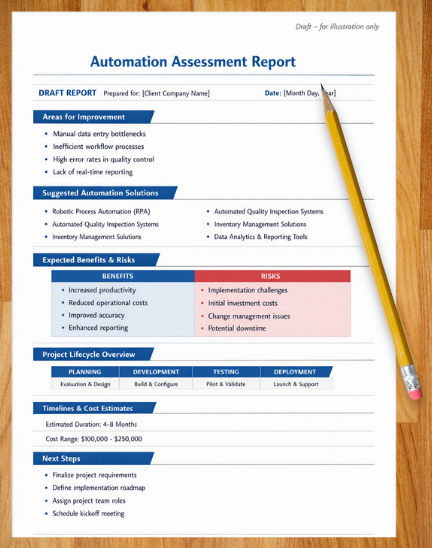
After the visit, you’ll receive a draft report summarizing our observations and recommendations. This includes:
- Areas for improvement
- Suggested automation solutions
- Expected benefits and risks
- Lifecycle overview for each project
- Estimated timelines and rough cost ranges
- Next steps to kick off implementation
We’ll schedule a review meeting to discuss the findings and help you prioritize projects most likely to deliver results.
Step 5: Moving Forward
Once you’re ready, we’ll provide a final project solution report with budgetary pricing for each selected initiative. From there, your management team can make informed decisions. By partnering with Mitsubishi Electric, you can execute projects that drive real business value.
Why Choose an Automation Assessment?
An automation assessment provides significant strategic value and should be prioritized as an initiative for any organization seeking to remain competitive.
Objective, Expert Review
By leveraging the perspective from outside specialists, you gain access to extensive cross-industry experience. Your team knows your plant through and through, but may overlook inefficiencies and opportunities.
Actionable Roadmap
This evaluation quickly offers a clear, practical plan for both immediate improvements and long-term automation projects. It lets you hit the ground running once your assessment is complete.
C-Suite Alignment
The assessment builds trust and ensures that executive leadership is strategically engaged and supportive of automation goals from the outset. With a clear definition of goals and ROI, the barrier to entry is lowered.
Baseline for Progress
A solid baseline for progress enables your organization to track improvements over time, adapt strategies as needed, and maximize the return on your investment.
In an environment where technological advancements and market demands shift rapidly, waiting to act can mean missed opportunities and increased risk. Taking timely action with a comprehensive automation assessment positions your company to drive measurable results and secure a sustainable competitive edge.
Want notifications for new Blogs, White Papers, Case Studies & Webinars?
Contributors

Sandra Diaz
Product Manager, Service and Training Solutions
Mitsubishi Electric


-
Inquiries
-
Select
& Quote -
Share
-
Partners