


Blogs
M8V Series CNC: Capabilities, Integration, and Use Cases


Summary: The M8V Series CNC is a modern CNC control platform from Mitsubishi Electric designed for machine builders and machining operations seeking high performance control, improved usability, and smarter manufacturing workflows. It combines advanced machining functions, intuitive operation, and built in connectivity features to support efficient production and flexible machine design.
Your Control Platform Drives Success, Here's Why
It’s no secret that manufacturing is competitive. All while machine shops across the nation are facing similar, ongoing challenges. They’re facing growing pressure to increase throughput, maintain quality, and adapt to workforce constraints. According to the U.S. Bureau of Labor Statistics, skilled manufacturing labor shortages continue to affect productivity and operational continuity in machining environments.
At the same time, machine builders face increasing expectations from their customers. And many believe motion performance is leveling across CNC manufacturers. What really matters to the customer is a platform that makes their life easier and ultimately brings profit and exceptional performance to their shop. A modern CNC stands out today by its ability to get up and running with no errors, its compatibility with existing equipment, and its general ease of use and support for operators.
This is the context in which the M8V Series CNC was developed.
What Is the M8V Series CNC?
The M8V Series CNC is part of Mitsubishi Electric's CNC family, designed for machining applications requiring high speed, high accuracy control, combined with modern usability features.
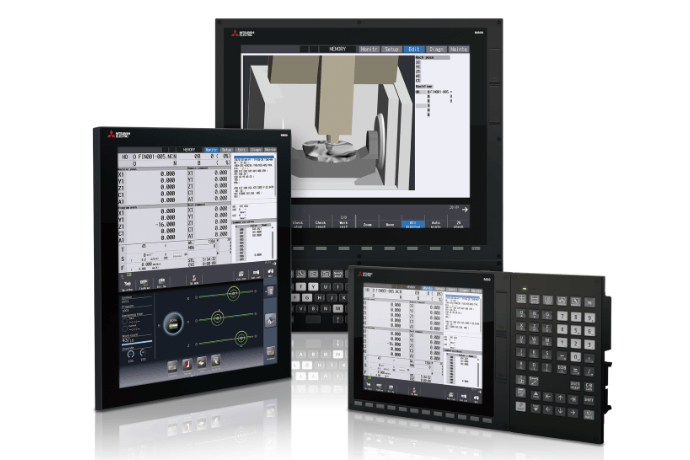
The M8V Series aligns with smart manufacturing principles. It introduces new control functions, improved human-machine interaction, higher speed and accuracy, and built-in wireless LAN functionality.
The M8V Series is intended for machine tool builders designing machining centers or specialized equipment and end users operating CNC machining environments with varying skill levels.
The M8V Series is an evolution of its earlier M8 controls, rather than a complete departure. It’s designed to work with Mitsubishi Electric drive and automation components and, in many cases, 3rd-party components. Like most products and solutions in the Mitsubishi Electric ecosystem, the M8V Series is built with compatibility at its core, making it backward- and forward-compatible and maintaining a similar footprint for easy replacement.
What's New with The M8V Series CNC?
High-Speed, High-Accuracy Machining
The M8V Series CNC enables high-speed machining without compromising accuracy by combining ultra-fast block processing, advanced motion control, and surface-smoothing algorithms that keep tools moving smoothly, even on complex, data-heavy programs.
Advanced Control Functions
These functions enable efficient machining without requiring major changes to existing programs:
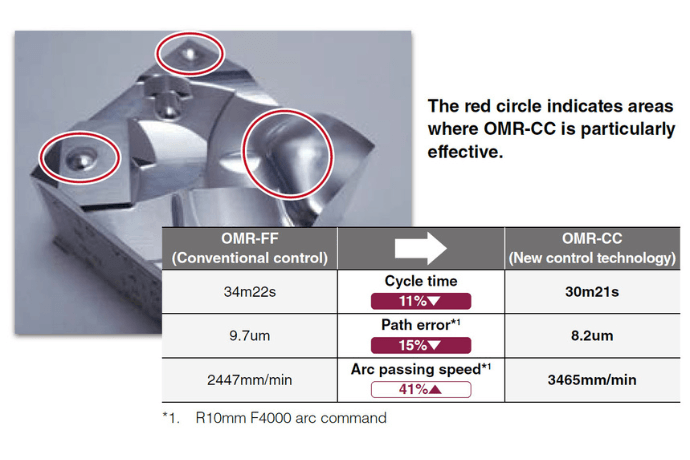
- OMR CC (Optimum Machine Response – Contour Control), which adjusts control processing based on workpiece shape to maintain accuracy while reducing cycle time.
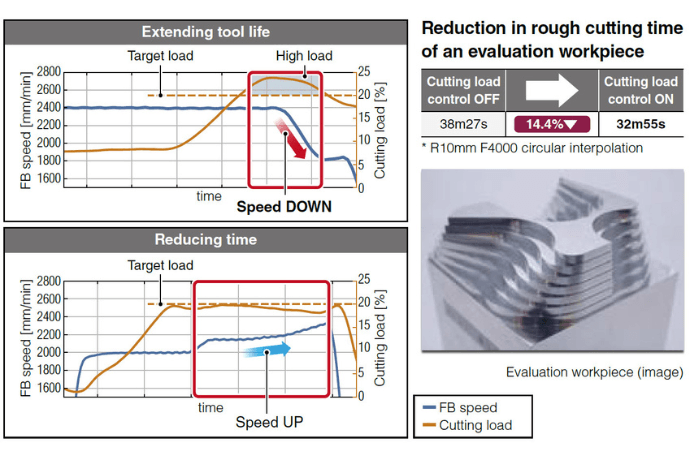
- Cutting load control, which automatically manages cutting load to support tool life and stable machining.
- Tool cutting point control, allowing compensation for tool shape changes without modifying machining programs on supported models.
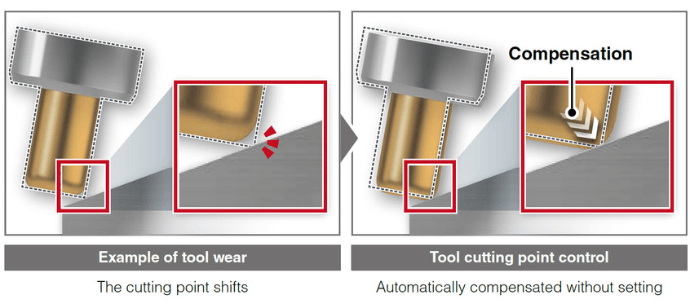
These functions maintain your existing output quality while helping to reduce trial and error adjustments during machining.
Connectivity and Data Handling
Data security is a major concern for our customers. For this, selected M8V Series models (those that are non-Windows-based) support built-in wireless LAN (internet built-in!), so you don’t need as many cables, and it's easier to send data between the machine and PC-based software tool, like your computer. It also enables you to take your data with you, machine-to-machine, so you can monitor performance across your shop.
When physical connections are in use, they are more vulnerable to unauthorized access and tampering. Built-in wireless LAN keeps that data secure with encrypted communication between the CNC and computer. Additionally, it allows customers to implement robust network security protocols, like firewalls and access controls.
Usability and Operator Interaction
The M8V Series CNC was designed with the operator in mind by offering:
- Multi touch gesture operation, similar to consumer devices (i.e., smartphones and tablets), to improve operator interaction/familiarity.
- Customizable CNC screens, allowing users to rearrange menus and display methods to suit their workflow.
- High definition 3D machining simulation, enabling verification of machining programs before cutting.
Simulation and visualization tools are excellent ways to reduce setup errors and scrap, especially in high mix machining environments. With greater visibility into the operation before, during, and after a project, your team can quickly address issues before they happen or soon after an event.
The M8V Series CNC Addresses Today's Machining Challenges
Skilled Labor Constraints
Capability: Intuitive operation, guided interfaces, and visual simulation
Outcome: Reduced dependency on deep CNC expertise for basic setup and verification
Setup Errors and Scrap
Capability: 3D machining simulation and program checking
Outcome: Earlier detection of collisions and programming issues before cutting, supporting company sustainability initiatives
Demand for Smarter Manufacturing
Capability: Built-in connectivity and customizable interfaces
Outcome: Easier integration into digital manufacturing workflows
CNC Selection Considerations: How to Choose the Right Control Platform
Over specifying a CNC can introduce unnecessary cost and complexity, while under specifying can limit future flexibility. When evaluating a CNC platform like the M8V Series, we recommend buyers consider and ask themselves:
- Are the advanced functions necessary for my machine type, or might a more standard control platform suffice?
- Do my operators possess adequate knowledge and training? While usability features can reduce training burden, it's important to have baseline knowledge of the platform.
- Does my plant have cybersecurity policies that might conflict with built-in LAN features?
- Is my organization prepared to take on ongoing software and service support required for the long-term investment of a CNC platform.
Rather than brand-to-brand comparisons, decision-makers should evaluate what matters to them. Examples include control responsiveness and stability, usability and any learning curve, simulation and verification capabilities, connectivity options and limitations, and CNC manufacturer support and product documentation.
Conclusion and Recommended Next Steps
In today's competitive manufacturing environment, customers face the dual challenge of (1) optimizing productivity while (2) ensuring seamless integration of new technologies into their workflows. Mitsubishi Electric’s M8V Series CNC stands out as an excellent choice to address these needs, offering robust connectivity and customizable interfaces tailored for digital manufacturing.
To maximize the benefits of the M8V Series, manufacturers should consider the selection considerations listed above. A crucial step is to engage with application engineers early in the design or retrofit process, which helps ensure a smooth implementation and supports long-term success. By following these steps, customers can confidently select a CNC solution that enhances flexibility, reduces setup errors, and supports their evolving manufacturing demands.
Want to talk to an engineer about your application?
Frequently Asked Questions
What is the M8V Series CNC designed for?
- It is designed for machining applications requiring advanced control, usability, and connectivity features.
Does the M8V Series include wireless connectivity?
- Built in wireless LAN is available on certain models, subject to regulatory constraints.
Can the M8V Series help reduce setup errors?
- Yes, through high definition 3D machining simulation and program verification tools.
Is the M8V Series suitable for machine builders?
- Yes, especially in applications that require flexibility, precision, and speed.
Does it require rewriting machining programs?
- Some control functions are designed to work without modifying existing programs, depending on configuration.
Is cybersecurity addressed?
- Wireless and network features must be configured according to applicable regulations and plant policies.
Ready to Connect With Mitsubishi Electric Automation?
Want notifications for new Blogs, White Papers, Case Studies & Webinars?
Contributors

Scott Strache
Senior Product Manager (Mechatronics)
Mitsubishi Electric

Matthew Bascue
Automation Center of Excellence Manager
Mitsubishi Electric


-
Inquiries
-
Select
& Quote -
Share
-
Partners