


Blogs
3 Steps for Boosting Throughput with Material Handling Automation in Modern Warehouses


Summary: This blog outlines a three-step approach to boosting warehouse throughput through material handling automation. It covers designing for throughput with Digital Twin technology, executing throughput with high-performance motion control and CC-Link IE TSN, and protecting throughput through visualization, predictive maintenance, and energy-efficient operations.
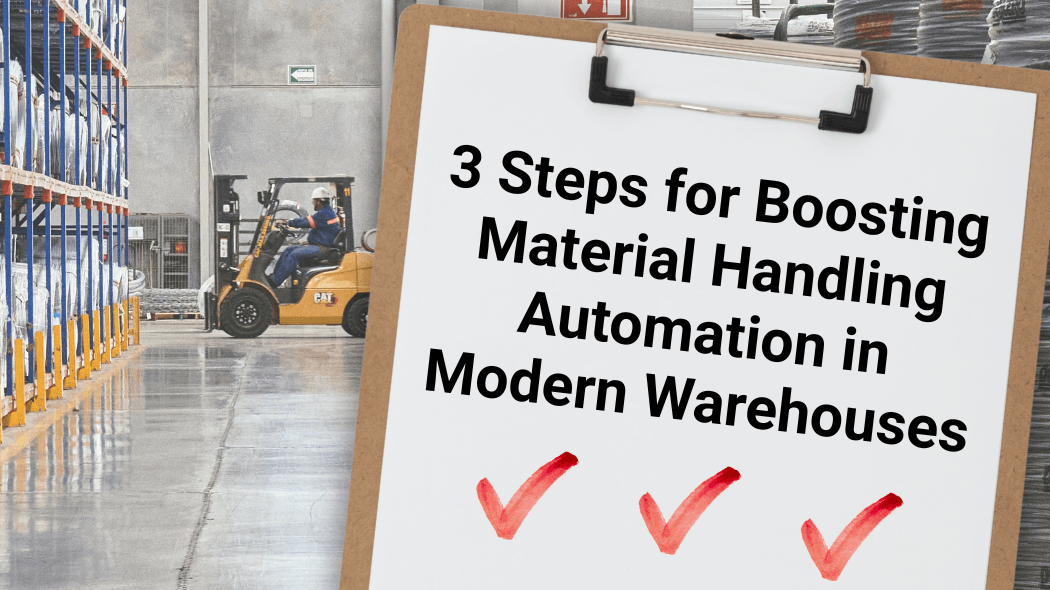
Warehouses have moved from storage-focused strategies to rapidly fulfilling customer or client demands. These shifting interests, which created a global e-commerce boom, aren’t going away anytime soon.
Times have changed. Typical waiting times for online orders were weeks or months, but now consumers expect to receive their orders within a day or two. Businesses now risk negative reviews if their wait times are longer than customers expect. Because of this, you need to stay competitive and fast. Logistically, this means turning to material handling automation.
Why Material Handling Automation is Critical for Modern Warehouse Throughput
Material handling automation refers to the use of automated equipment, control systems, and software to move, store, sort, and manage materials throughout a warehouse or distribution facility. This includes conveyors, sortation systems, robotics, motion control, industrial networks, and visualization tools working together to improve throughput, accuracy, and reliability.
Maximizing throughput isn’t as simple as simply pushing for faster conveyor belts. It’s a multi-layered challenge that requires factory synchronization, smart power consumption, an optimized layout, and precision mechanical execution.
When you integrate automation, your warehouse transforms from barely getting by to a high-performing, competitive, modern moneymaker. Mitsubishi Electric helps you streamline your warehouse in 3 steps.
1. Build a Strong Foundation: Design for Throughput
The placement of your warehouse's equipment is important. If you haven’t simulated how conveyors, forklifts, and even floor workers move together before pieces are bolted to the concrete, you’ve made a mistake.
Designing for throughput requires careful use of a "digital-first" philosophy. You need to validate every movement and tweak issues before a single component is installed. This is where "Digital Twin" technology comes in.
Digital Twinning for Risk Reduction
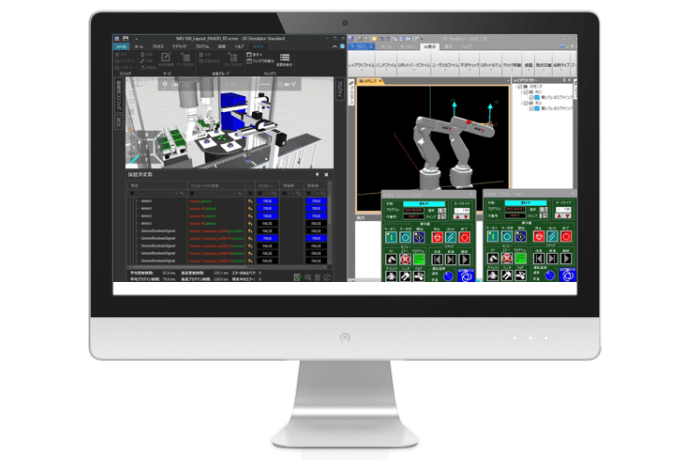
A digital twin is a virtual 3D replica of a physical object, such as a warehouse floor plan. Using MELFSOFT Gemini 3D Simulator software, you can create a replica of your warehouse and include everything you see during a workday, such as forklifts moving through lanes to deliver pallets or boxes. It can also incorporate workers.
By creating a 3D virtual twin, you can develop a replica that considers physical interactions such as movement, spacing, and interference within the layout. You can then test this replica through various scenarios, such as an ordering surge during the holiday season, where demand is significantly increased. Will the layout, flow paths, and system configuration handle such a significant increase without creating bottlenecks or safety issues? Gemini can help.
Line Layout Verification
Line layout verification lets you run a "what-if" scenario and compare different equipment configurations until everything moves smoothly. All of this happens before you invest in equipment.
Will the placement of equipment impede the flow of forklifts, requiring a longer route, which uses more fuel and drives up costs? Will employees have enough time to safely reach the emergency exits during a fire if a conveyor is blocking them? Blocked lanes and poor layouts impact safety and productivity.
2. Keep Things Moving: Execute Throughput
Now that you’ve experimented with different layouts and validated a final design, you need to move toward executing throughput. Even a delay of a hundredth of a second can cause substantial losses. These losses eat into capacity and revenue.
High-Performance Motion Control
Modern warehouse subsystems include components ranging from automated inserters and high-speed sorters to precision diverts and multi-axis gantries. Each machine depends on high-performance motion control. If a machine's arm moves slowly while sorters move swiftly, packages may pile up, reducing throughput.
In many automated conveyor systems, solutions such as Variable Frequency Drives (VFDs) provide simple, cost-effective motion control. For more complex motion control, a more precise solution is required.
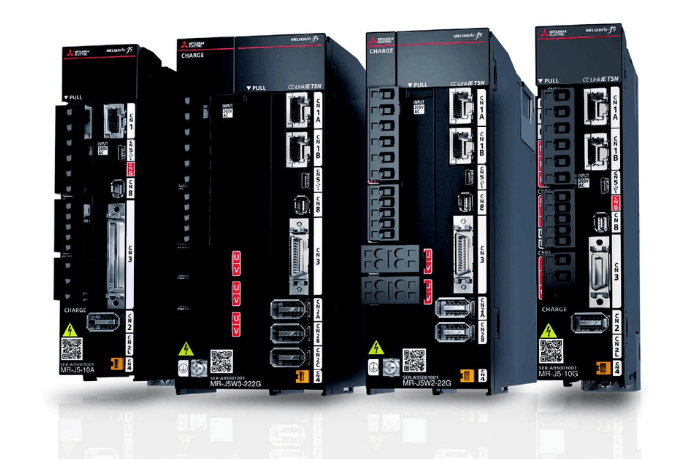
Servo systems are central to high-performance motion control. They are mainly used when precise movement is required, such as indexing or pick-and-place. Servo drives provide the frequency response and encoder resolution needed for these applications. Mitsubishi Electric offers the MR-J5 Series of servomotors and amplifiers to achieve high-performance motion control for material handling automation.
- Precision Handling: Whether it is a gantry robot picking a fragile SKU or a labeler applying a tag to a box moving several meters per second, the MR-J5 ensures fluid, accurate motion.
- Vibration Suppression: High-speed movements naturally create mechanical resonance. The MR-J5 features built-in AI algorithms that automatically detect and suppress vibrations. This allows the machine to settle instantly, moving to the next task without waiting for shaking to stop.
The Problem of Micro-Delays
Micro-delays significantly affect throughput. Solutions like digital twins and real-time data collection can help.
Digital twins help prevent micro-bottlenecks in warehouses by allowing for line layout verification. Micro-bottlenecks occur when one component of a system struggles to keep up with others. For example, containers reach the labeler before a label is printed because the conveyor takes a fraction of a second longer to reach the labelers than assumed. That creates a short, yet frustrating, bottleneck that impedes productivity.
Micro-delays can also happen when, for example, a motor has to wait for the PLC’s command. The network may experience lag, slowing a conveyor line. When you have a system that must stay in perfect sync, even a micro-delay can be devastating. Mitsubishi Electric has the ideal solution, CC-Link IE TSN (time-sensitive networking).
CC-Link IE TSN acts as the system’s nervous system, eliminating micro delays by enabling in-depth, real-time data collection and deterministic messaging. It enables simultaneous communications between network stations.
3. Consider the Future: Protect Throughput
Let’s paint a scenario. Your warehouse has been operating at 100% capacity for the past two days, and everything seems to be going perfectly. Suddenly, there’s an unexpected breakdown. Maintenance needs six hours to diagnose and fix the issue.
In this scenario, your high-throughput facility is no longer such. A high throughput requires a steady flow of goods. It’s clear that a switch from reactive maintenance to predictive and preventive maintenance is crucial.
Essential Data From GENESIS
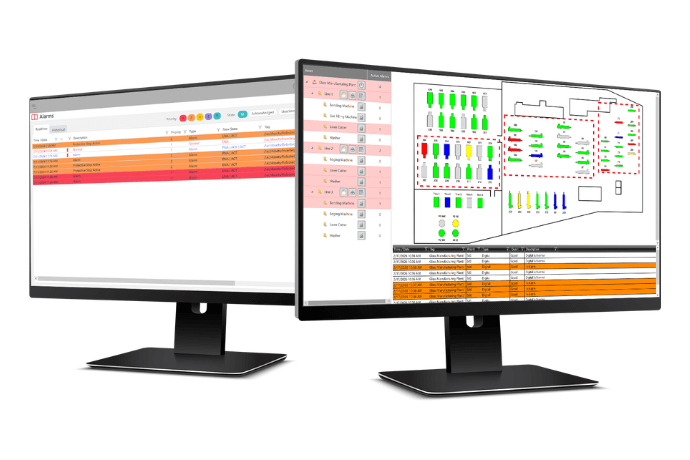
It’s impossible to fix what you can’t see. Visualization of your material handling automation offers actionable insights from data. With SCADA solutions, such as GENESIS, warehouse managers can monitor performance in real time, even at the level of individual machines.
GENESIS offers:
- Heat Maps: They represent complex data such as tables, sensor readings, or geographic information using color. The warm-to-cool color scale makes it easy to see intensity or patterns, such as high energy use, equipment issues (alarm or warning severity), or space usage.
- Predictive and Preventive Maintenance: Instead of scheduling maintenance at fixed intervals like monthly or twice a year, AI and edge computing monitor a machine’s health continuously and notify you of even the smallest change, helping you avoid emergencies or costly repairs.
- Remote Monitoring: Managers and machine operators track the status of drives, motors, and sensors on a mobile device, enabling them to perform other tasks and boosting efficiency and performance.
Efficient Control and Energy Reliability
The electrical "health" of a warehouse is often overlooked as a factor in throughput. Frequent tripped breakers for no apparent reason undermine efficiency and productivity. A reliable source is needed, such as Mitsubishi Electric's VFDs (variable frequency drives). VFDs protect your throughput by:
- Improving Energy Efficiency: VFDs lessen the load on a warehouse's electrical system by optimizing power consumption, even under heavy loads.
- Lowering Heat: Efficient power conversion extends the life of electronic components by keeping control cabinets cooler.
- Reducing Stress: When conveyor systems start up, there’s a lot of mechanical stress on the belts and bearings. Soft starts using a VFD reduce the risk of that type of damage.
Partner With an Expert in Material Handling Automation
Today’s supply chain continues to evolve, and automation, such as robotics, motors, and software help reduce errors that eat into your profit margin. You can keep things as they are and hope for the best, or bring your warehouse into the modern age by embracing the benefits of material handling automation.
When implemented strategically, material handling automation is not just a way to move products faster. It is a way to reduce operational risk, avoid unplanned downtime, and protect long-term return on investment by keeping warehouse systems synchronized, visible, and resilient as demand changes.
Investing in automation is essential for success and maintaining a competitive edge. Working with Mitsubishi Electric to boost throughput ensures you have the right tools, hardware, and software to modernize your warehouse, increase performance, and ensure reliability.
Ready to Connect?
Want notifications for new Blogs, White Papers, Case Studies & Webinars?


-
Inquiries
-
Select
& Quote -
Share
-
Partners