


Blogs
Why More Facilities Are Turning to Data Center Liquid Cooling Systems


Summary: This blog explains how data center liquid cooling systems address the higher thermal loads created by AI and high-performance computing. It compares direct-to-chip and immersion cooling, explains the role of a Coolant Distribution Unit (CDU), and outlines how PLCs, HMIs, and VFDs support liquid cooling system operation.
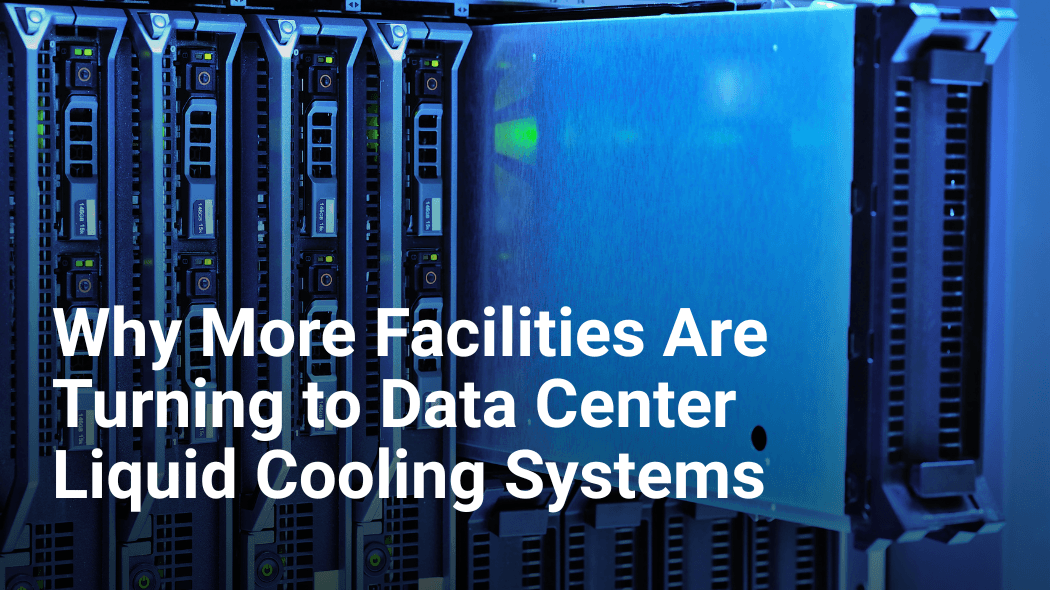
Rack densities and thermal loads are increasing as AI and high-performance computing place greater demands on data center infrastructure. Traditional air cooling may not be sufficient in these high-density environments, driving greater interest in data center liquid cooling systems.
What Are Data Center Liquid Cooling Systems?
Data center liquid cooling systems use liquid rather than air alone to transfer heat away from high-density computing equipment. Common approaches include direct-to-chip and immersion cooling, both of which can help manage the thermal loads associated with AI and high-performance computing.
The Demands of AI and High-Performance Computing
High-performance computing and AI are driving a shift from CPU-centric to GPU-centric computing. As rack densities and processor power increase, removing heat from high-performance computing equipment becomes more challenging. Direct-to-chip and immersion cooling are two approaches designed to manage these higher thermal loads.
The Differences Between Direct-to-Chip and Immersion Cooling
An AI-focused facility might find that direct-to-chip cooling isn’t right, or that immersion cooling isn't advantageous. Sometimes, neither one is ideal. Before you make a decision, look carefully at how they work.
What Are Direct-to-Chip Cooling Systems?
In direct-to-chip liquid cooling, cold plates are attached to heat-generating components such as CPUs and GPUs. Coolant flows through the cold plates, absorbs heat from the components, and carries that heat away from the server.
As the coolant passes through the plate, it absorbs heat. It continues to a coolant distribution unit (CDU), where one of two things happens.
- Liquid-to-Air CDU: Fans cool the liquid before it recirculates.
- Liquid-to-Liquid: Water is used to cool the liquid before it recirculates.
A direct-to-chip system may use either a single-phase or two-phase cooling process. In a single-phase system, the coolant remains liquid throughout the process as it absorbs and transfers heat. In a two-phase system, the coolant changes from liquid to vapor as it absorbs heat, then condenses back into liquid as the heat is removed.
What Are Immersion Cooling Systems?
In immersion cooling, IT equipment is submerged in a dielectric fluid that absorbs heat directly from the components. In single-phase systems, the fluid remains liquid and transfers heat to a heat exchanger. In two-phase systems, the fluid boils as it absorbs heat, then condenses and returns to the bath.
- Single-Phase: The dielectric fluid remains liquid as it absorbs heat from the equipment. The heated fluid moves to an external heat exchanger or CDU, where the heat is removed before the fluid returns to the tank.
- Two-Phase: The dielectric fluid boils as it absorbs heat. The vapor rises to condenser coils, where it releases heat, condenses back into a liquid and returns to the bath.
Pros and Cons with Each Cooling System
Both systems work effectively, but the cooling system you choose is dependent on your needs. Each has pros and cons.
Direct-to-Chip systems:
- Cold plates are specific to chips, meaning they must be replaced if your compute changes.
- Fits into the standard envelope of the data hall.
- Efficiently remove heat.
- Hoses and connections can spring leaks that damage equipment.
- Maintenance is easier to complete.
- Upfront costs are lower.
DTC single-phase is still the most popular type of cooling
Immersion systems:
- Custom designs are almost always necessary.
- Eliminates the need for CRAC or HVAC units.
- The floor must support the weight of the tanks and fluid.
- Handles incredibly high thermal loads.
- Maintenance is difficult, as servers must be removed and cleaned before work on the cooling system begins.
- Offers complete cooling of all hardware.
- Recaptures all generated heat, making it possible to recycle it.
- Requires specialized tanks and large quantities of fluid, so initial costs are higher.
Tips for Choosing a Mixed Approach
Many facilities find that a mixed approach is ideal. You don’t have to pick one system over the other. A high-performance computing environment often benefits from low-density CPUs cooled the old way with cool air and fans, while high-density GPU areas need liquid cooling systems.
The Importance of CDUs for Coolant Flow
A Coolant Distribution Unit (CDU) is a core part of a liquid cooling system. It manages coolant circulation and temperature between the computing equipment and the facility cooling infrastructure. Depending on the system design, a CDU can:
- Circulate the coolant in a closed-loop system, removing heat from computing equipment.
- Transfer heat from the technology cooling system to a secondary cooling loop or heat exchanger.
- Monitor coolant flow, fluid levels, pressure and temperature, enabling faster detection of abnormal conditions.
- Be sized according to the compute load and cooling requirements of the space. Some modular CDUs can accommodate changing loads, but capacity and future expansion should be considered during system design.
Why You Need Automation Technology with Your Liquid Cooling System
Before selecting a CDU for your facility’s liquid cooling system, consider the automation technology to pair with it so it works flawlessly from day one. Mitsubishi Electric’s HMIs, PLCs, and VFDs are essential parts of your overall system.
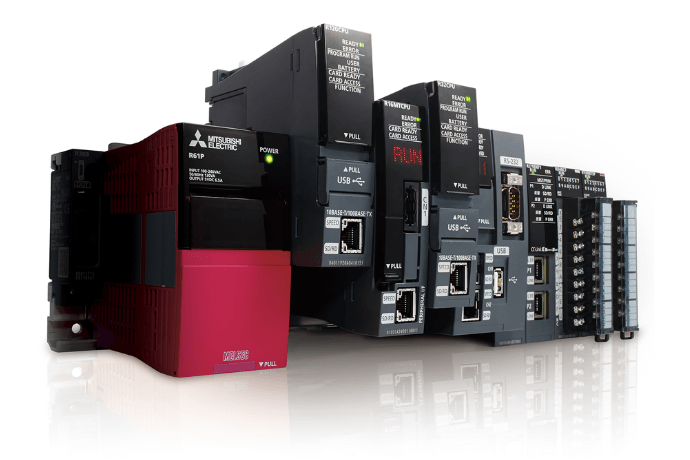
Programmable Logic Controllers (PLCs) have programmable controls that help you scale your facility’s system as needs change. Our PLCs have expandable I/O, fiber-optic communications, hot swapping, reprogrammability, multi-CPU architecture, and support redundant configurations.
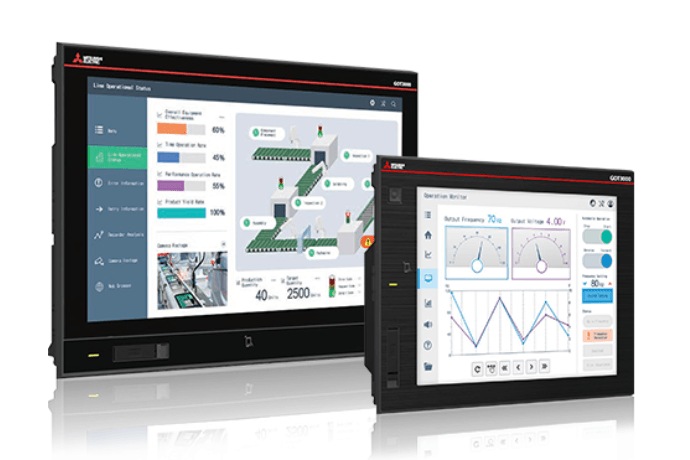
With our Human-Machine Interfaces (HMI), you have control, visualization, and real-time data to analyze whether things are going well or need adjusting. Alarms alert your team to potential issues before they lead to costly equipment damage.
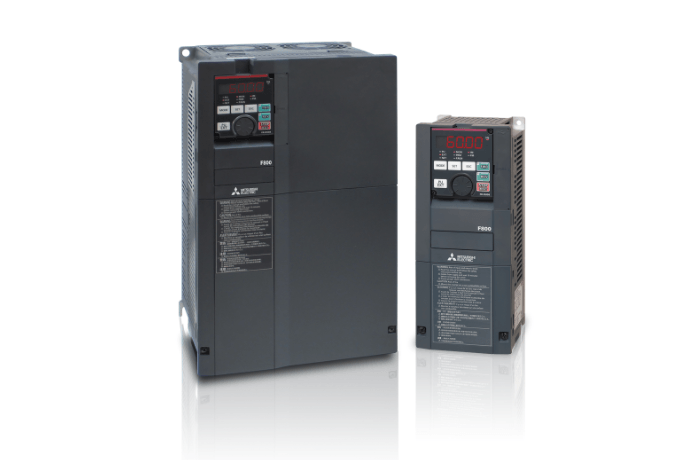
Variable Frequency Drives (VFDs) are essential as they can match the cooling system’s pump speed to match fluctuating cooling demand. This reduces your power consumption and lowers your long-term operating expenses.
What Should You Look for in an Automation Provider?
Mitsubishi Electric specializes in automation technology for liquid cooling systems. No matter who you select, make sure you’re finding an automation provider who provides:
- Flexibility: As your facility grows and technology changes, keeping up with those shifts is important. You need data center infrastructure that accommodates new cooling architecture without replacing the entire system. Your automation provider needs to support scalability with expandable control architectures.
- Reliability: Your data center is a critical part of your facility, and it must be cool to work properly. If you end up with automation technology that doesn’t provide the configurability and redundancy you need, a lot is at stake.
Building a More Reliable Data Center Liquid Cooling System
Your facility's data center needs to stay cool, but it needs so much more. Partner with a company that looks beyond equipment temperature. Energy use, changing workloads, resilience, and thermal efficiency are primary considerations.
AI is changing the way companies work every day. With Mitsubishi Electric, you’re ready for the future of high-performance computing.
Ready to Connect?
Want notifications for new Blogs, White Papers, Case Studies & Webinars?


-
Inquiries
-
Build YourQuote
-
Share
-
Partners