


Blogs
Wastewater Lift Station Upgrades for Better Reliability and Lower Costs


Summary: This blog explains how wastewater lift station upgrades help municipalities improve reliability, reduce energy consumption, and lower maintenance needs by replacing legacy equipment with advanced automation technologies such as VFDs and PLCs. Modern solutions provide anti-clogging capabilities, predictive maintenance insights, SCADA integration, and redundant system operation to help prevent failures and reduce operational costs.
All the sewers in the United States are estimated to be worth more than $1 trillion. Yet of the almost 17,500 wastewater treatment plants, only 38% provide the advanced treatment needed to remove modern contaminants from water.
We’ve reached a crisis point, with many wastewater systems nearing the end of their lifespans (40-50 years). As municipalities look to modernize infrastructure and reduce the risk of overflows and catastrophic failures, there must be a balance between the cost of improvements and the need for reliability.
Today’s municipalities face strict environmental regulations, tight budgets, and difficulty finding workers. As money is spent in those areas, it cannot override a wastewater treatment plant’s need for lift stations. Sewage needs to move from trucks and sewers to sewage tanks and pits, then to the digesters and other downstream equipment. Lift stations also account for an estimated 10-30% of a wastewater district’s energy consumption.
With today's technological advancements, wastewater lift stations can move your system from reactive emergency management to an automated, proactive system with predictive maintenance, preventing costly shutdowns. Wastewater lift station upgrades can be done using variable frequency drives (VFDs) and programmable logic controllers (PLCs) that reduce costs and protect your municipality.
Legacy Lift Stations: Vulnerabilities and Wasted Money
Older lift stations have their weaknesses. Even if a system seems to be working fine now, it can become a money pit that needs attention.
Constant Speed Pumps Are Inefficient
With older equipment, lift stations relied on pumps that ran at a constant speed. They were either turned on or turned off. When the sewage reaches the maximum line, the pump turns on. When it was at the minimum line, it turned off again.
When a pump turns on or off abruptly rather than gradually, it can be stressful for the different components. The force and jolt create physical stress on bearings, impellers, seals, and valves. Sudden starts and stops lead to failed components over time.
The system's constant all-or-nothing operation also drives up energy costs. The pump suddenly draws power, going from a standstill to full operation in an instant.
Non-Flushable Items Create Log Jams Requiring Immediate Attention
You’ve seen them in stores, and you know what a headache they are at your treatment plant. The wipes that claim to be flushable, but they’re not. People flush pads, diapers, and "flushable" wipes, even though you’ve asked them not to.
They’re the greatest operational headache for any wastewater treatment team. Add cooking oil that gets poured down the drain and other fats that come off dishes during washing. That fat, oil, and grease (FOG) cling to non-flushable items and wind around impellers.
If an impeller cannot turn and a pump clogs, it can’t move fluid. It draws more current, hoping to push the clog out. Energy costs spike, the pump trips, and you could end up with an overflow.
Clogs Cost Money
Clogs, as described above, or sewage entering faster than the wastewater process can handle (common if your storm drains connect to your sewer lines) can cost money. An alarm goes off, so a plant supervisor must determine the source of the problem. Workers shut down equipment. Issues are found and resolved. The equipment comes back online.
Each worker gets an hourly wage plus overtime. If you have 104 clogs a year costing you 208 hours of labor, that’s extra money spent on payroll. Annual maintenance costs across systems average $236,000, driven solely by clogs.
A labor shortage can make it hard to find enough workers to do the job quickly. If you’re experiencing a shortage in your municipality, those overtime wages may increase significantly.
Also, consider the cost of trucks and equipment needed to clear a line, the sewage building up when nothing is happening at the plant, and the risk of releasing untreated or partially treated sewage into a river, lake, or other body of water. EPA fines can be crippling, and the people in your community won’t be happy paying higher taxes when it was a preventable issue.
VFDs are the Key to Wastewater Lift Station Upgrades
One of the easiest wastewater lift station upgrades is replacing outdated constant-speed starters with VFDs.
They allow the motor’s speed to change in response to real-time demands. This matches the inflow from the wet well to the pump’s output.
It’s a financially sound change because VFDs operate in accordance with the Affinity Laws.
It analyzes the pump’s speed, flow rate, and power consumption and adjusts as needed. The savings add up. VFD-driven pumps can achieve energy savings of 20% to 40% simply by matching speed to demand.
Your pump isn’t suddenly starting and stopping. There’s less mechanical wear on your pump and its components, which extends pump life. As a result, our wastewater lift station upgrades reduce the risk of emergency shutdowns and emergency service calls.
Intelligent VFD Can Remove Non-Flushables
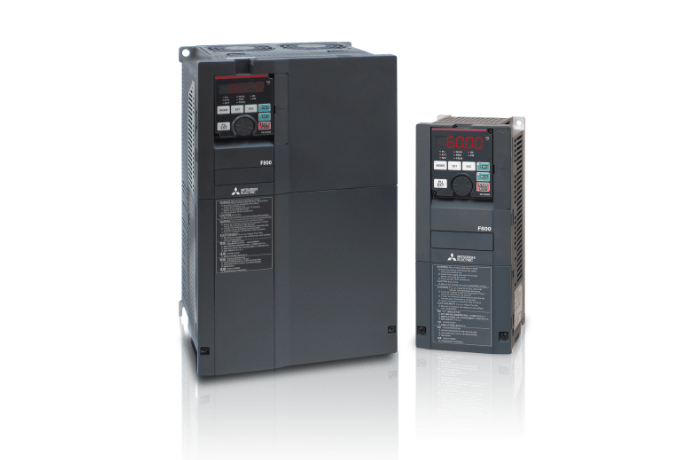
When planning wastewater lift station upgrades, Mitsubishi Electric’s FR-F800 VFD does more for your facility than you could imagine. The newer edge-computing tech within the VFD has built-in anti-clogging.
Instead of a pump completely clogging, the intelligent VFD continuously monitors the motor's operation. It analyzes current draw, shaft speed, and torque. The minute there’s a change with the impeller’s function, it knows. It immediately goes into a de-ragging mode.
- Detection: The VFD notices a spike in the current being drawn or the motor’s torque.
- Reverse De-ragging/Anti-clogging: The drive immediately reverses its rotation to flush out the debris.
- Forward clearing: The VFD changes direction again to push the items through the pump.
- Repetition: If that doesn’t clear the clog, reverse and forward cycles repeat until the clog is gone.
With this automated process, there’s no need for workers to manually unclog a pump, which can be dangerous in tight spaces and involve the use of unsanitary materials. It’s especially helpful if you already struggle to find wastewater labor.
In real-world applications, such as those highlighted in a recent case study, implementing this automated anti-clogging capability eliminated rag-based clogs. A Tennessee wastewater treatment plant faced repeated clogs that physically impacted workers and cost too much money. They needed a solution that worked.
Mitsubishi Electric partnered with Bertelkamp Automation to deliver effective wastewater lift station upgrades by installing an FR-F800 Series VFD at a lift station. This change successfully eliminated routine maintenance visits to problematic lift stations and improved performance. Workers no longer had to stop everything to clear another clog.
Building a Resilient, Integrated Automation Ecosystem Within Your Wastewater Facility
While VFDs help you achieve energy savings and reduced maintenance, you can achieve the ultimate reliability with a fully integrated automation ecosystem.
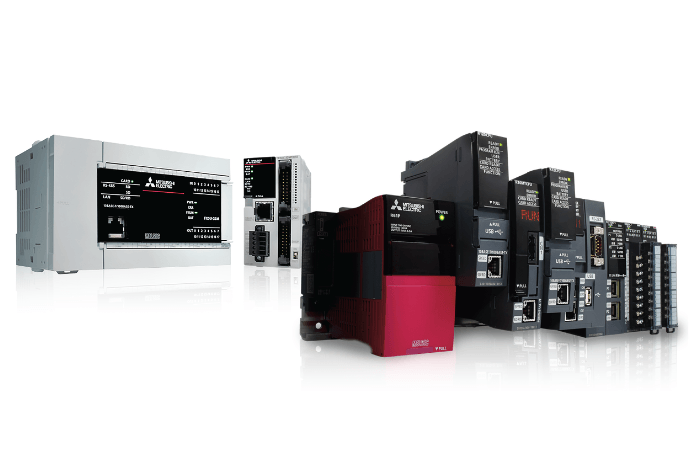
By integrating a trio of industrial automation technologies (VFDs, PLCs, and HMIs), these wastewater lift station upgrades allow your wastewater treatment plant to enter a new era of modernization. It all ties into your preexisting or new centralized Supervisory Control and Data Acquisition (SCADA) network.
Redundancy Through Dual-Drive Configurations
To be truly resilient, you cannot have any points of failure. Modern lift stations use dual-drive configurations that operate in a lead/lag sequence.
Using a PLC, runtimes are constantly monitored and adjusted to determine which pump is the “lead” to keep mechanical wear even. If one pump encounters a problem that requires human attention, the system automatically switches to the other pump. Operations never falter.
Save Time with Predictive Maintenance
Nothing is more frustrating than a sudden failure that halts your plant operations. When you integrate smart technology, your PLC and VFD become a diagnostic hub. Some of the smart instruments to consider are:
- Insulation Monitoring: Detects motor insulation wear before a short circuit occurs.
- Remote SCADA Visibility: Provides workers with real-time analytics, including alarm histories, energy metrics, and flow rates. Information goes right to a smartphone or other device for convenience.
- Vibration Analysis: Catches bearing wear early to prevent failure.
Knowing this information in advance, you no longer need to perform regular manual inspections. The system alerts you when something changes, so you can address it before emergency repairs are necessary.
Infrastructure Upgrades End Up Paying for Themselves
While there is an initial cost to upgrade aging lift stations with modern automation tools like VFDs and PLCs, the savings in energy and labor are lower. These upgrades pay for themselves in just a couple of years.
If you’d like to transition from reactive maintenance and frequent clogs to predictive, anti-clogging technology that reduces energy consumption and lets your workers focus on their daily routines, reach out. Mitsubishi Electric’s specialists are ready to help you determine the best approach for your wastewater lift station upgrades, modernizing your facility while lowering overall operational costs.
Ready to Connect?
Want notifications for new Blogs, White Papers, Case Studies & Webinars?


-
Inquiries
-
Build YourQuote
-
Share
-
Partners